



KANSAS CITY, Mo. — KSHB 41 reporter Tod Palmer covers sports business and eastern Jackson County, including Independence. Share your story idea with Tod.
—
A team without strong leadership is destined to struggle, but the unique nature of FIFA World Cup soccer puts an even greater premium on playing for a higher purpose.
As professionals, players are scattered across continents in a hodgepodge of leagues — including Major League Soccer, the U.S. top division. The best players often wind up in Europe, but it’s truly a global game.
But that’s the club side.
Everything changes when a country puts together its national team, calling players from all corners of the soccer world together for a few days or weeks to prepare for international matches — none bigger than the FIFA World Cup, which will stage six games in Kansas City in a few months.
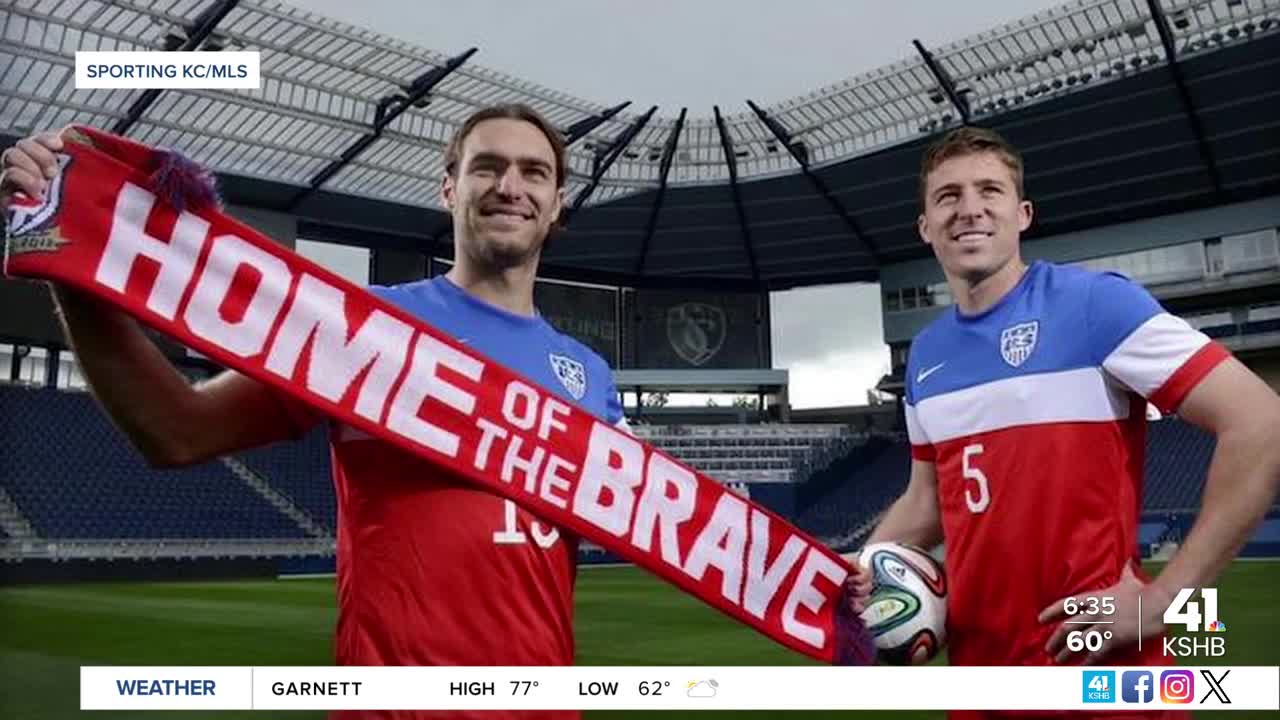
“It's such a unique dynamic,” said former Sporting Kansas City centerback Matt Besler, who played in the 2014 World Cup for the U.S. Men’s National Team. “I think it can be studied and it can be analyzed. It's just a completely different setting than club [soccer].”
Besler and midfielder Graham Zusi helped power a golden era of Sporting KC soccer, combining for 12 MLS All-Star selections and earning league-wide awards.
The duo was rewarded with a trip to Brazil, helping the U.S. men advance from pool play by beating out Portugal on goal differential.
“One of the big difficulties of the national team is that you have so little time with this group of players, but you're just expected to gel in such a short amount of time, which is tough,” Zusi said.
Chemistry must be built almost instantaneously.
“You have this group of people from all walks of life, from different backgrounds,” Besler said. “You’ve got guys coming in from different countries. They play a different style. They're being coached in a different way. They have their own leadership style. You all have to come together immediately and make it work.”
At the club level, a hierarchy naturally evolves — veterans and the highest-paid players lead the team vocally and by example. They set the tone in training, in the locker room and, if they perform in games, those teams usually thrive.
But every player on a national team is a star at the club level. Having two dozen alphas doesn’t work without humility.
“Having that personal ego sometimes is what makes you great,” Besler said. “It's your edge, and you have to have a certain level in order to make it to the highest level. So, it's all about the balance, and sometimes there's a fine line.”
There’s also a sense of duty.
“With the national team, there's this other factor of, even more so from your club, you're playing for this greater good,” Zusi said. “You're representing your country.”

Oftentimes, that requires players who are rivals, sometimes heated ones, to find common ground as rivalry gives way to mutual respect.
“You compete against certain guys and you have rivalries going on, but I go back to what I said earlier, when you play with the national team, you put all your personal rivalries, your egos, you put it aside, and it's all about the team,” Besler said.
It’s the only path to success, and Kansas City’s most-accomplished USMNT veterans hope their successors figure out how to come together, establish rapport and put on a show for the home fans by June.
“Man, when people are playing together and for each other, that trumps talent for me,” Zusi said. “So, I’d just like to see them get into a great spot mentally and really be kind of firing on all cylinders leading up to these first three group matches.”
USMNT opens Group D play on June 12 against Paraguay in Los Angeles. Australia and Turkey are also in the group.
GEHA Field at Arrowhead Stadium will host six games — including a Round of 32 clash on July 3 and a quarterfinal on July 11.
There also will be four group-stage games — Argentina-Algeria (June 16), Ecuador-Curacao (June 20), Tunisia-Netherlands (June 25) and Algeria-Austria (June 27).
—

![020626_KSHB_Image_NXA_Web_Standard Cube[88].jpg](https://ewscripps.brightspotcdn.com/dims4/default/0ead409/2147483647/strip/true/crop/300x225+0+13/resize/960x720!/format/webp/quality/90/?url=http%3A%2F%2Fewscripps-brightspot.s3.amazonaws.com%2F8f%2F6c%2Ffad8bd2346c5a4d4ead793017d4a%2F020626-kshb-image-nxa-web-standard-cube88.jpg)