



KANSAS CITY, Mo. — KSHB 41 reporter Isabella Ledonne reports on stories in Overland Park, Johnson County and topics about government accountability. Share your story idea with Isabella.
—
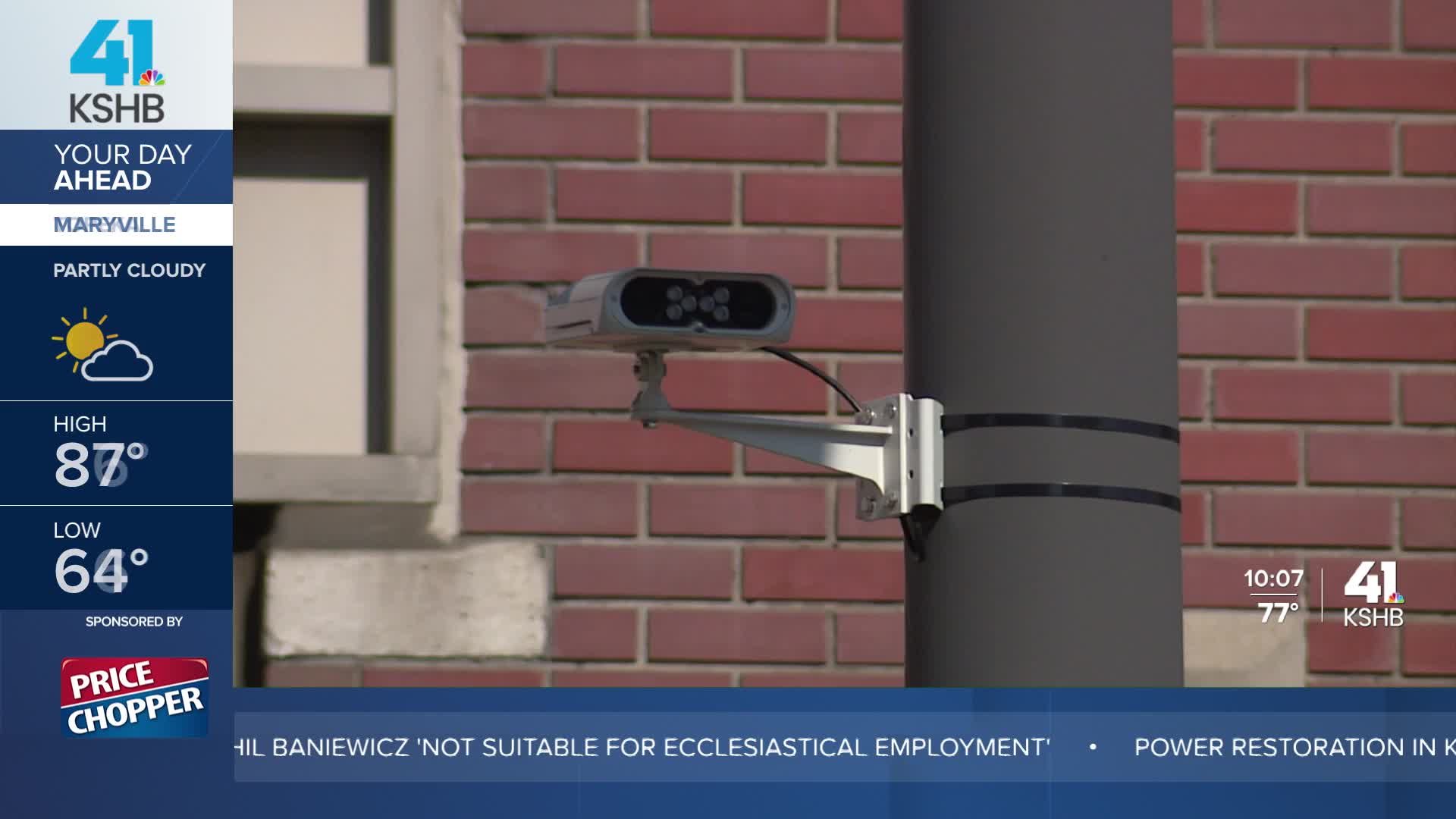
Conversations around automated license plate readers, commonly referred to as Flock cameras, are heating up as discussions dive into the legality of privacy for everyday citizens.
But law enforcement says they are using the AI technology to help track criminals and close cases nationwide.
A man suspected of a shooting in Odessa, Missouri, was arrested Thursday after police said they identified his vehicle from a Flock camera. Deputies with the Cass County Sheriff's Office found the suspect's car that was flagged by the surveillance camera.
While trying to make an arrest Thursday, 36-year-old Brendan Freed crashed into a deputy's car in Peculiar. Deputies arrested Freed shortly after a foot chase.
While many departments have reported using the camera technology for criminal cases, it has raised privacy concerns among everyday residents.

"People are concerned on where the data is stored, who has it and who it's getting sold to," Lee's Summit resident Trace Kitzmann said.
From Kearney to Platte City, some Kansas Citians are making it clear on how they feel about Flock cameras in the community.

"I find it incredibly sad that people can't rely on the democratic processes, they feel like they can't make their voices heard and affect change that way," Adam Hollis, founder and leader of Eyes Off KC, said. "They have to go and resort to vandalism. I don't really condemn it, I don't condone it either."
The city of Kearney, as well as the Kansas City Police Department and Blue Springs Police Department, has reported they have seen tampering with automatic license plate readers.
It comes during a national movement known as 'DeFlock,' calling on communities to speak out against the cameras.
"I think it says that this is a very hot topic and that Americans in general do not want to be surveilled," Hollis said. "Almost nobody has actually voted for this."
Hollis is the founder of Eyes Off KC, an organization that has been holding educational events on the Flock surveillance cameras and spreading awareness on how to call on city leaders.
"At the end of the day, it's really just coming together with your neighbors and demanding these be taken down and not put back up by any other company," Hollis said.
Kansas communities like Gardner and Wellsville made the decision this week to get rid of their Flock camera contracts following the public backlash.
"The City of Gardner Police Department has discontinued use of all Flock cameras and notified the provider that the contract has been canceled," a city spokesperson said. "The decision reflects an ongoing evaluation of technology and resources to ensure the Police Department is using tools that provide the utmost value to the community and support its public safety operations."
The decisions also come after Flock announced they would be making mandatory changes to improve accountability for police departments, like requiring an internal audit system and establishing a seven-day data storage default period compared to the current 30-day one.
"Flock is feeling a lot of heat because Americans are waking up and realizing what these powerful technologies do, and they don't like it," Jay Stanley, senior policy analyst with the national ACLU, said.
More than 5,000 police departments are a part of the Flock network, which gives law enforcement across the country access to Kansas City cameras when making inquiries for cases.
"We've never really seen anything like this in human history," Stanley said. "It raises significant questions about privacy and civil liberties and what kind of communities we want to live in."
KCPD and Blue Springs police report they have used Flock technology to help solve cases like homicides and property crimes.
But a growing number of police departments, including a recent case in Bonner Springs, Kansas, are reporting cases where their officers are abusing the technology for personal stalking.
"I think the abuses far outweigh the benefits," Hollis said.
Stanley explained he is tracking a number of lawsuits against the AI surveillance cameras and anticipates the issue of privacy invasion to eventually end up in the courts.
"There's a lot of ways you can protect your privacy as an individual, but not here," Stanley said. "This is something that has to be done through government."
Last week, several KC-metro communities launched their own watchdog groups to investigate Flock and ALPR technologies.
There is a website to see if your license plate has been searched. According to the page, it gathers audit logs using FOIA requests to track activity within the Flock system.
—

![092126_KSHB_WX_480x360[61].jpg](https://ewscripps.brightspotcdn.com/dims4/default/79e7fad/2147483647/strip/true/crop/480x360+0+0/resize/960x720!/format/webp/quality/90/?url=http%3A%2F%2Fewscripps-brightspot.s3.amazonaws.com%2F6f%2F6d%2Fa3758caf4c0984b0ecf100f620d1%2F092126-kshb-wx-480x36061.jpg)