

OSAWATOMIE, Kan. — KSHB 41 reporter Ryan Gamboa covers Miami County in Kansas and Cass County in Missouri. He is committed to telling stories in your community. This follow-up was spurred by concerns Ryan heard in Osawatomie. If you have a story you'd like to share, reach out. Share your story idea with Ryan.
—
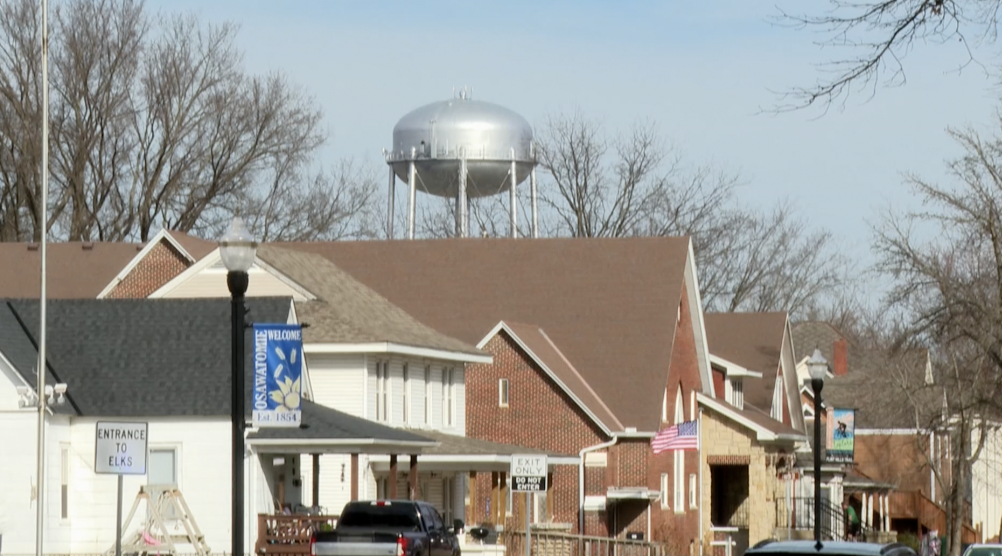
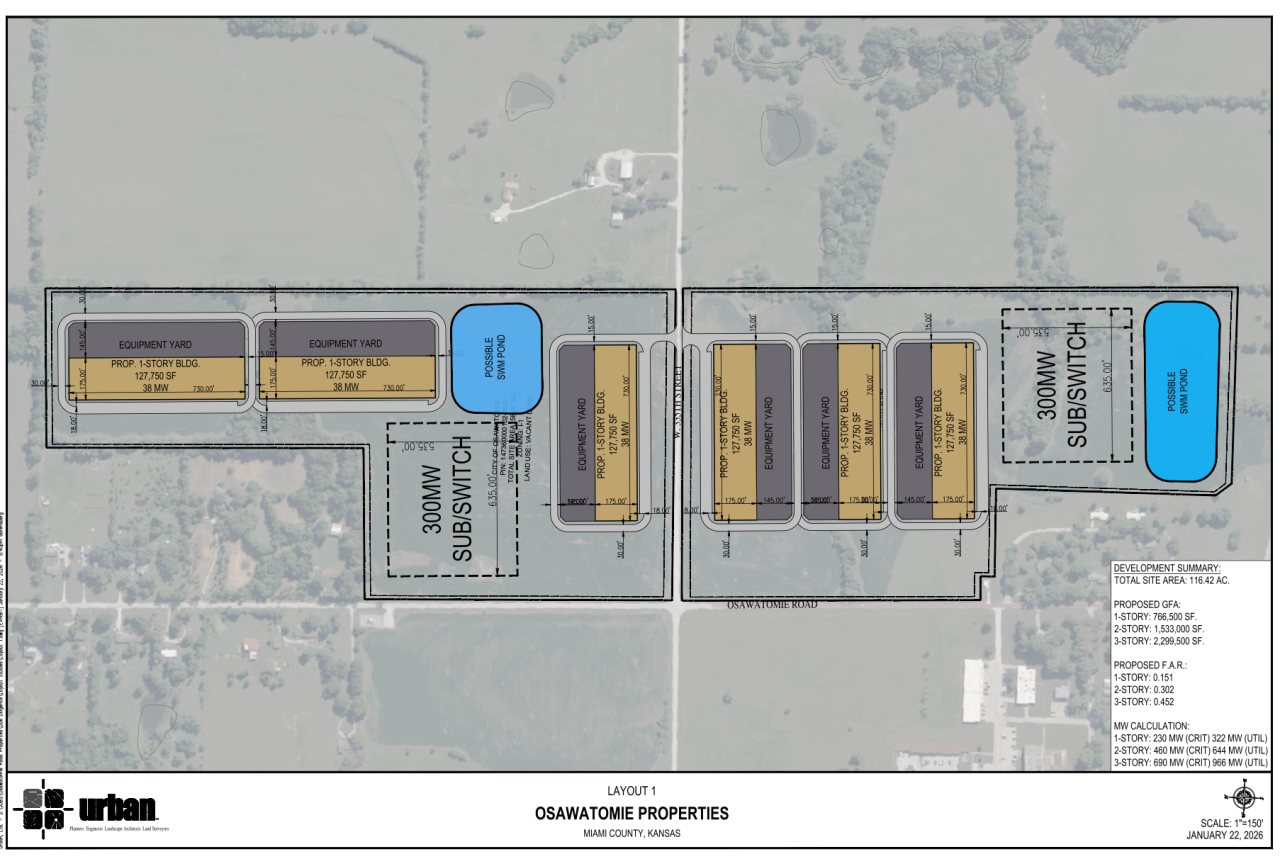
The city of Osawatomie, Kansas, entered into a predevelopment agreement with Alcove Development for a proposed $1 billion data center project that would sit on 115 acres north of the town of about 4,000 residents.
The project would be the largest commercial development in the city's history, and it is already drawing significant pushback from residents who have long been concerned about the city's aging water infrastructure.
The proposed campus would span 600,000 square feet and would employ between 60 and 90 full-time workers upon completion.
Construction on the project could bring in up to 350 jobs.
Osawatomie City Manager Bret Glendening told KSHB 41 reporter Ryan Gamboa that the development would be a turning point for a city where 80% of the tax base is residential property.
RELATED | Miami County Commission considers pause on data center construction following nearby $1B proposal
"One of the things we have not been able to successfully do is land a big commercial development," Glendening said. "In my mind, residents of Osawatomie should be cheerleading for this project. That's not saying this project is going to happen tomorrow or likely in the next six months. Our goal here is not only to bring a significant commercial development to our community, but also to increase our tax base that isn't residential."
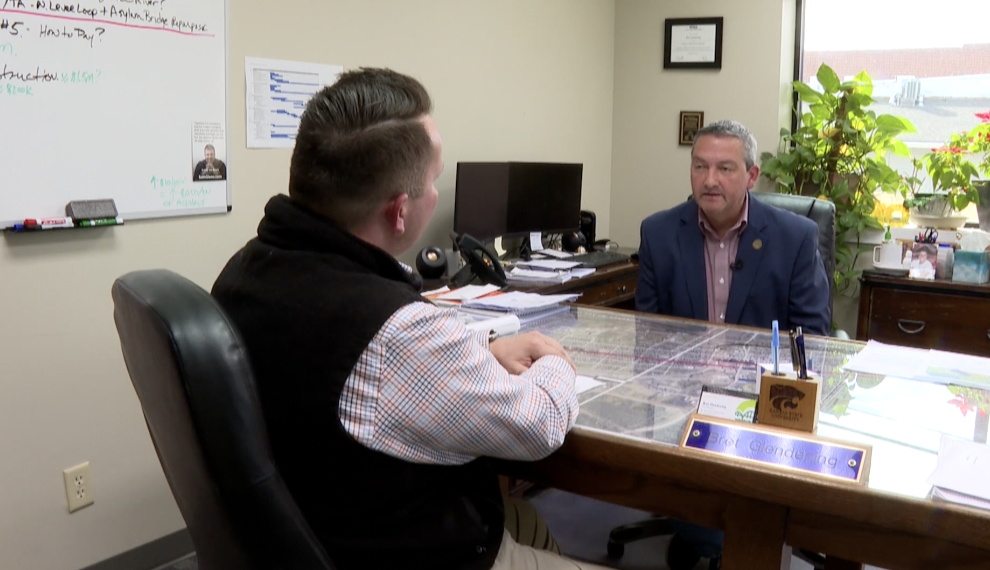
Glendening says commercial development carries more financial weight than residential growth.
"It takes a lot more residential properties to equal that of one single commercial development," Glendening said. "Every dollar of commercial development is equal to two dollars of housing. We get a lot more bang for our buck when we get a commercial development happening in our community."
According to the city, increasing its tax base with a major data center development could help lower the city's mill levy rate, ultimately saving residents money.
What the agreement includes
The city agreed to a three-year contract giving Alcove Development priority for surveying the land, with the exclusive right to develop the site.
Beginning this summer, the developer will start sending payments for the purchase of the property over that three-year period.
The developer can back out at any time.
Osawatomie agreed not to market the property to any other developers during that period.
The city also agreed to abate 50% of property taxes for 10 years and issue Industrial Revenue Bonds payable to the developer.
Those bonds would not be a city obligation.
The contract requires the city to provide 1 million gallons of water and 150 megawatts of power per day, including 5 megawatts of renewable energy credits available through an adjacent solar array operated by the city.

The predevelopment agreement was introduced in early December, according to Osawatomie City Council meeting minutes. The council approved it in January.
All meetings offer an opportunity for public comment, according to agenda records.
Resident concerns
Not everyone in Osawatomie is on board.
Herb Byard lives down the street from the proposed site and has questions about the project's impact on the community's water supply.
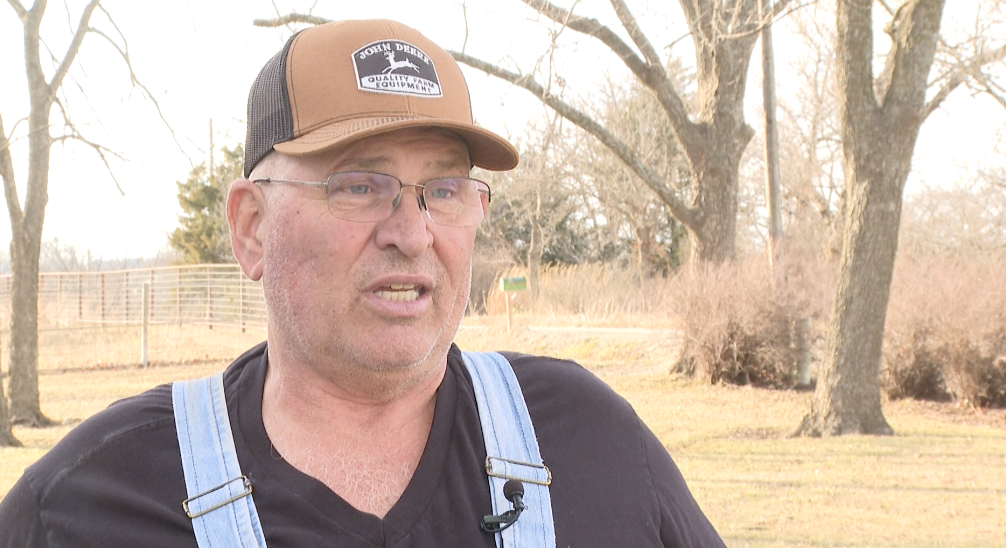
"How are they going to supply them a million gallons a day?" Byard said. "What wants to live next to that? I don't really particularly like [it] and they haven't even built it yet... The people, the citizens of this county and the city, would like to be involved in some of these decisions."
Byard says he wants the city to put any promises about lower property taxes in writing.
Osawatomie resident Jacob Ginsberg shares those concerns and questions whether the project is the right fit for the community.
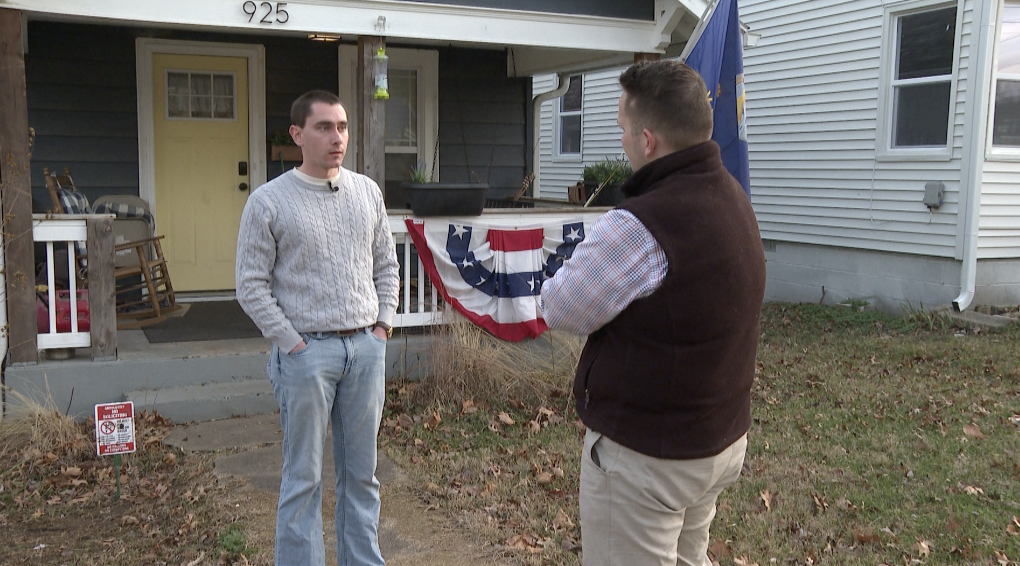
"They're willing to sell out people for a data center. Between light pollution, water consumption [and] electricity, I'm worried about my utility bills," Ginsberg said. "It's gonna be like living next to [the] Chiefs stadium with it being lit up all the time."
Ginsberg is also skeptical about whether or not the development would deliver the financial benefits city leaders are promising.
"They might be able to get our property taxes lower, but I also think they're going to kill our property value at the same time," Ginsberg said. "I highly doubt that a 600,000-square-foot facility that really doesn't do much but taxes. I don't think that's going to help a whole lot. That doesn't make much sense to me."
Ginsberg also questioned whether a data center is the best use of the available land.
"We've got two Casey's in town, a couple restaurants; that's about it. Out of all the ways we could use 115 acres, this is how we're gonna use it?" Ginsberg said. "I don't think it's going to create jobs in the long run. You wanna talk about financial stability? A stable income is how you do that, not through taxes."
Since the council approved the predevelopment agreement, residents have expressed concerns online and frustration with the city's priorities, with many saying they were unaware of the project.
Some of those concerns have been shared using AI-generated images, as artificial intelligence is driving the demand for data centers.

Glendening says he tries to stay off social media. He says he can present the facts, but that does not mean people will believe them.
Residents have since been expressing their concerns at city council meetings, and two residents also voiced their opinions during a legislative committee meeting in Topeka.
Water supply questions
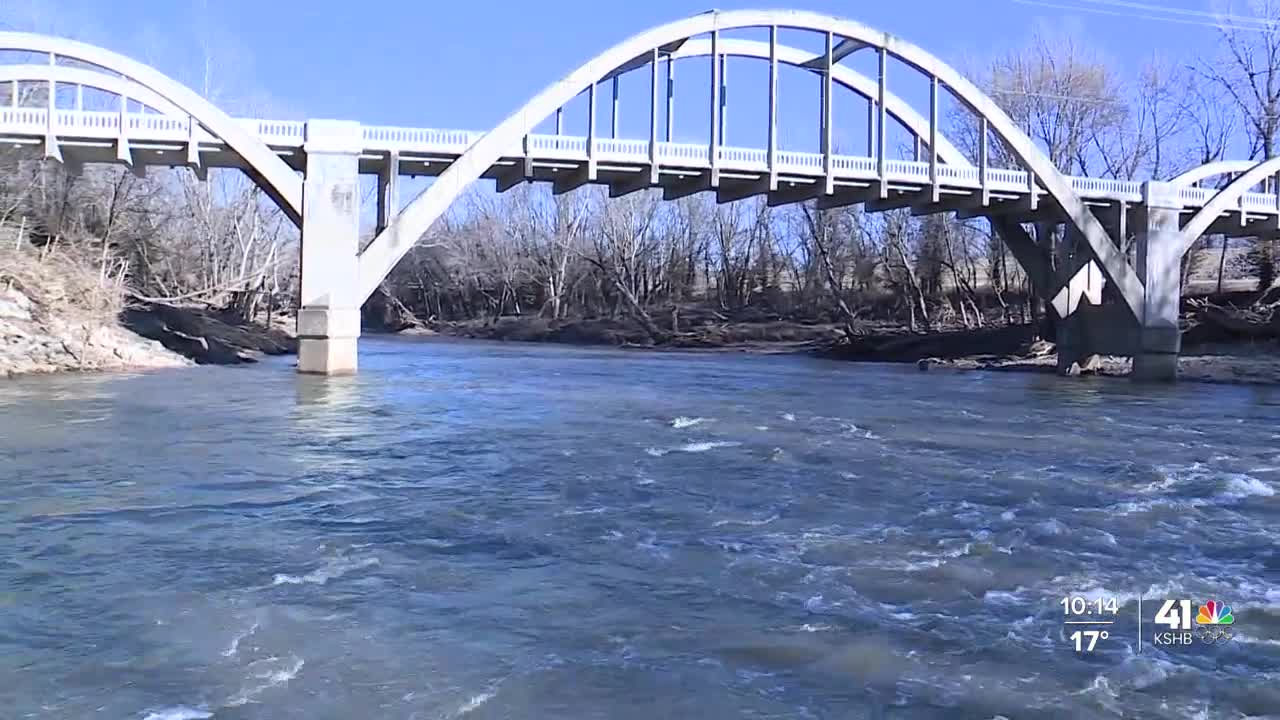
The Marais Des Cygnes River is the primary water source for Osawatomie and is at the center of residents' concerns — concerns that predate the data center proposal.
Water issues in Osawatomie are not new.
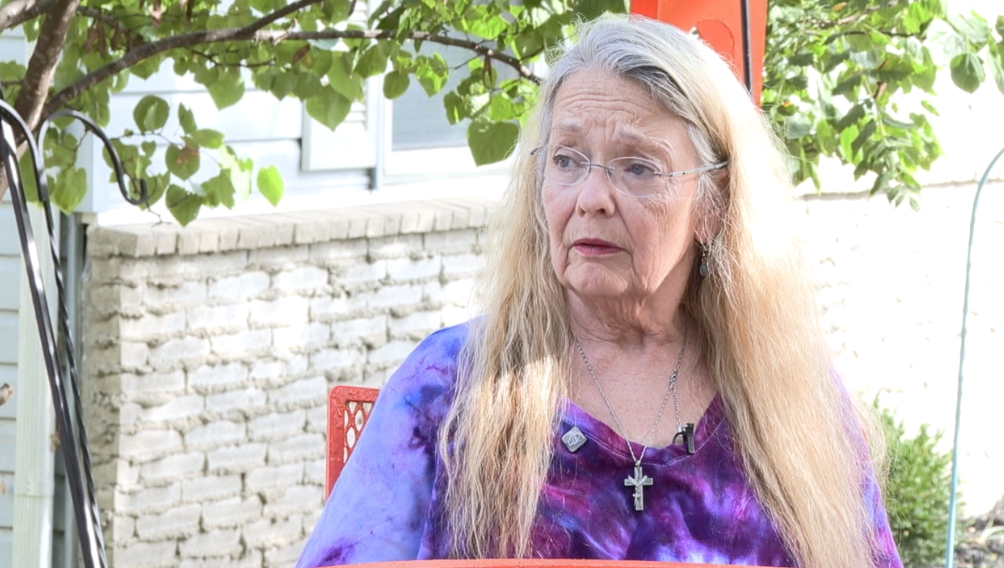
Resident Cheryl Wallace raised concerns about the city's water in 2024, ahead of a new water treatment plant being built.

"That's from the water," Wallace said as she showed hard water residue built up in her humidifier. "I just want to live."
RELATED | Osawatomie gets funding for a new water treatment plant
In September 2024, the Osawatomie City Council voted unanimously to accept $48 million in federal loan and grant funding to build a new water treatment plant.
Of that total, $30 million will fund construction of the new plant, and the remaining $18 million will replace 75% of the city's distribution lines.
The city is obligated to repay $30 million in loans over 40 years to USDA Rural Development.
The city's current water treatment facility was built in 1939. Much of it is operated manually.
RELATED | 'High' legionella levels in Osawatomie State Hospital water from May 2025
"I believe this will set the course for the next 50 years," Glendening previously said of the new plant.
Water rates began increasing in January 2025 as part of the 40-year loan agreement.

"We were going to be forced to raise water rates, whether we purchase water or build a new facility," Glendening said in 2024. "Now, we have more control within our local government to monitor those rates without working through another entity."
Construction on the new plant is expected to last five years, beginning once engineers can submit a secure bid and plan. Completion of the project is still years away.
RELATED | Osawatomie water not impacted after 2024 State Hospital Legionella detection
Despite the plant still being in the renovation stages, Glendening says the city's infrastructure can handle the demand a data center would bring.

"The city of Osawatomie has senior water rights on the Marais Des Cygnes River. We are currently using 40% of our allocation," Glendening said. "We approached 750,000 gallons a day on average. We peaked at 1.2 to 1.3 million gallons a day. We have the capacity to go an additional million and a half gallons. An additional million gallons will take us to 80% of our allocation."
During an interview last week with Gamboa, Glending said the new water treatment plant "can absolutely handle" a data center and daily operations.
Lane Letourneau, with the Kansas Department of Agriculture's Division of Water Resources, oversees water rights across the state. His primary concern with any large-scale water user, including a data center, is whether the area can sustain the demand.

"The biggest concern is we want to see that they're located in an area of Kansas that has an adequate water supply," Letourneau said. "Whether it be surface water or ground water, we want to make sure that there's enough water available in that part of the state to ensure that the folks that are already there already have adequate water supply."
Letourneau says the state accounts for heavy usage through releases from the Pomona and Melvern reservoirs along the river during drought conditions. On average, the impact of adding a data center to the water supply would be minimal.
"A million gallons per day, 1.5 cubic feet per second, compared to 800 on average, that's about 2% of the flow," Letourneau explained.

Letourneau says the river can handle the added demand most of the time.
"I would say at least 90% of the time, yes," Letourneau said.
Under Kansas water law, it is the priority of a water right — not the type of use — that determines who has access to water first.
That means senior water right holders, like the city of Osawatomie, are entitled to make full use of their allocation before more junior users can draw from the same source.
"It's the priority of your water right and not the type of use that gives you the right to divert water," Letourneau said. "That allows a senior water right holder, they got to the water right first, to make full beneficial use of that water. That way, you aren't spreading out the water over a bunch of different users to where they can't get the benefit of the water that is there."

Any new water right application would require the city to demonstrate the use is in the public interest, does not impair existing water rights, meets safe yield requirements and ensures adequate supply.
The Kansas Water Office would run models to confirm there is enough water before approving anything, according to Letourneau.
In an email to KSHB 41, the Kansas Water Office explained that it has not received an application for greater allocation of water from the city of Osawatomie.
"We encourage entities wanting to plan operations with large-scale water demands to inquire with the Kansas Water Office early in the planning process, regarding sufficient potential water supply, to ensure that future capacities are accurately assessed," a Kansas Water Office spokesperson wrote.

Letourneau cautioned that there could be limitations for a junior water user depending on conditions.
"There may be times with this very junior user that they may have to limit operations, but we can't make that prediction yet," Letourneau said.
How a data center is cooled will be a key factor in how much water it uses and how downstream users could be affected.
According to a report by the Brookings Institution, a typical data center uses 300,000 gallons of water each day, equivalent to about 1,000 households.
Large data centers can use an estimated 5 million gallons of water each day, equivalent to the needs of a town of 50,000 people.
The report goes on to explain projections show water used for cooling may increase by 870% in the coming years as more facilities are built.
Letourneau explained that technological advancements in data centers can help limit the impact to local water supply.

Brookings Institution explained the amount of water varies based on whether a center uses a closed-loop cooling system, which can reduce freshwater use by up to 70%. Other design improvements, including air cooling and immersion cooling, can also limit water use.
People in neighboring communities expressed concerns about their water supply and the downstream impact of a data center.
"Without knowing how it was going to use it, I don't know 100% how folks downstream would be impacted, but a new water right cannot impair an existing water right downstream, a change application cannot impair and cannot increase the net consumptive use," Letourneau said.
Letourneau says that with proper planning, downstream users would be protected.
"If everything was used and conditioned appropriately, there would be no impact downstream," Letourneau said.
Letourneau was not able to speak on the impact a data center could have on monthly bills.
Glendening says he would not encourage the city council to pass increased water costs on to residents.
"I would not even ask my council to vote on a rate of increase that is driven by a large consumer of water. That development needs to pay for it themselves," Glendening said.
Utility cost concerns
Many residents' concerns also center on the potential for rising utility costs. The city says any impact on utility bills would be fronted by the end user of the data center.
"I have communicated to the developer multiple times: in order to secure those power demands, you have to bring those to use," Glendening said. "There's also a capacity component, too. So whatever you're generating, whatever you're consuming, you have to generate that capacity."
Infrastructure and legislative backdrop
The proposed data center site has its own legislative history.
In 2006, the city reacquired the land where the data center would be built.

Part of that deal required the land to be used for economic development. Glendening says the city has since invested millions into building up the area's infrastructure.
That agreement is set to expire this summer. The city is hoping to maintain the property and attended a legislative committee hearing in Topeka to advocate for Senate Bill 146 — legislation for land acquisitions between the city of Osawatomie and the state of Kansas.
Legislators on the Local Government Committee told concerned residents who attended the hearing that it does not have jurisdiction over what takes place on the property.

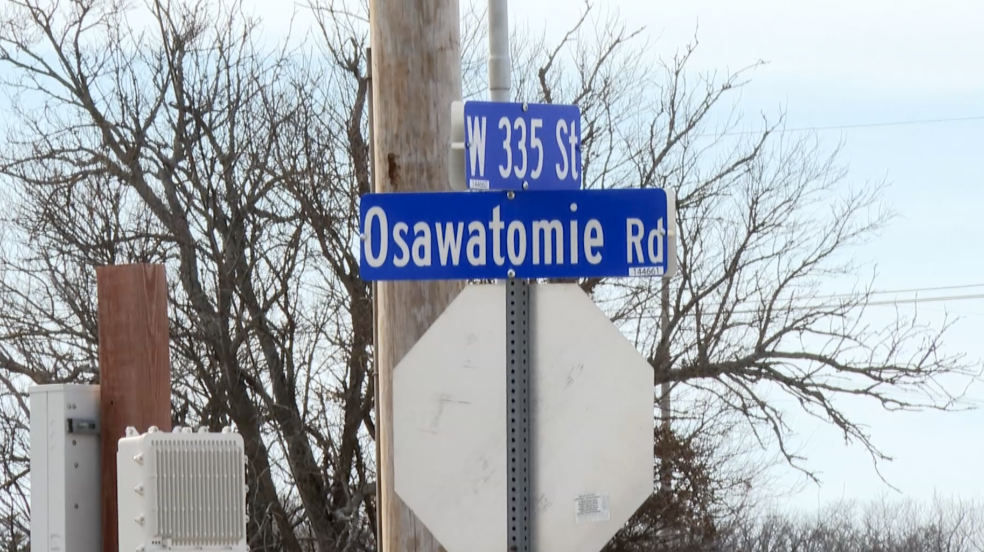
The proposed data center would sit across the street from the Osawatomie State Hospital, a psychiatric facility.
KSHB 41 has repeatedly reached out to the Kansas Department for Aging and Disability Services, which oversees the hospital, for comment. We have not yet heard back.
What comes next
A data center is not a done deal in Miami County. It is only an option at this stage.
It is up to Alcove Development to determine whether the land is suitable for the project.
Residents will likely have additional opportunities to weigh in. The developer will probably need a Special Use Permit to move any proposed project forward.

KSHB 41 has also reached out to Alcove Development multiple times with a list of questions by email and has not yet heard back.
We value seeing stories through to completion and intend to continue covering this topic.
This story was reported on-air by a journalist and has been converted to this platform with the assistance of AI. Our editorial team verifies all reporting on all platforms for fairness and accuracy.
—