

KANSAS CITY, Mo. — KSHB 41 reporter Tod Palmer covers sports business and eastern Jackson County, including Independence. Share your story idea with Tod.
—
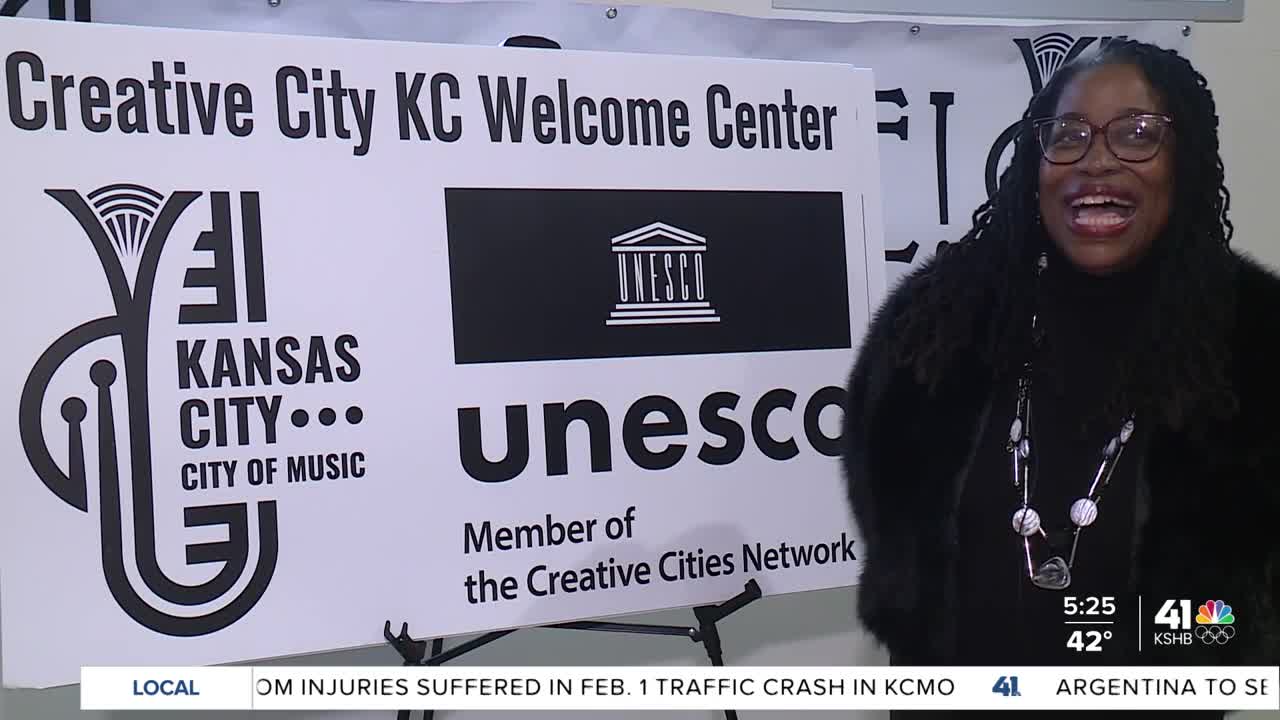
Anita Dixon-Brown may not be a household name in Kansas City, but her work to honor the city’s jazz heritage and secure its futures has been vital in recent years.
“I don't think we have anybody as passionate as her, because you always could relate jazz with Anita,” Jackson County Legislator Venessa Huskey, who met and befriended Dixon-Brown in 1985, said. “She was somewhere in the mix.”
Dixon-Brown, who died Jan. 4, was a fierce and passionate advocate whose tireless efforts helped Kansas City gain global renown for its jazz and ragtime roots.
“She saw the history of Kansas City's African American community truly as a national and global treasure,” Dr. Jacob Wagner, an associate professor of urban planning and design at the University of Missouri-Kansas City, said.
Wagner co-founded Creative City KC with Dixon-Brown.
“The city of Kansas City, Missouri, is a member of the UNESCO Creative Cities Network, the first City of Music in the United States recognized by UNESCO, and that is because of Anita Dixon Brown,” he said.
Kansas City received that recognition in 2017 and she helped New Orleans — where jazz was born before it came to Kansas City to grow up, as Dixon-Brown liked to say — in October 2025.
“Anita was really well known for moving forward on things,” Mike Corrigan, who owns B.A.C. Musical Instruments in the Historic 18th & Vine Jazz District, said. "She was kind of no nonsense. She's very passionate about the music scene, and she just went for it. She didn't let anybody get in her way, because she believed in the power of music and jazz and the history of the neighborhood.”
Corrigan, also known as “The Horn Doctor,” moved to Kansas City in 2004, which is how he became connected with Dixon-Brown.
“I've been around musicians and the jazz scene since I've moved here to town, and I had recognized her at so many different functions and events,” Corrigan said. “I wondered who she was, because everywhere I went, I would see Anita and she was always just full of energy and passion.”
When she learned that Corrigan made and repaired instruments in the Jazz District, Dixon-Brown forged a decades-long bond.
“She instantly said, ‘We need to work with you; we're trying to carve out a strategy that involves the entire ecosystem of the music industry,’ and right then I was like, ‘Oh, man, this is going to be a lot of fun,’” Corrigan said.
But it wasn’t just Kansas City’s jazz heritage that Dixon-Brown fought to secure.
“Anita was a force of nature,” Wagner said. “She was a passionate advocate for her community, for Kansas City, for preservation, historic preservation and heritage. She was a passionate advocate for the youth. She really wanted to make sure young people growing up in Kansas City knew that they were in an amazing city with amazing history.”
Dixon-Brown also wanted to grow up in a city that invested in and profited from — culturally as well as through tourism and entertainment dollars — a vibrant music scene.
“She wanted to make sure it wasn't just about the past, but it was also about the future, that young people had the opportunity to go into the industry — career development, workforce development, all those important skills that can be learned along with learning music. That's what she was all about.”
She could be blunt, but Dixon-Brown always acted with love and a big ol’ grin.
“I loved her smile,” said Huskey, who grew to love jazz as a child when her father played it on long car rides. “Whenever you saw her, it was — see, Anita had this smile that, yeah, it was contagious.”
Just like her passion for jazz in Kansas City — its history and its future.
Dixon-Brown’s love and dedication helped promote Kansas City to a global audience and even compassionately brought that audience to Kansas City on at least one occasion.
She had big plans for showcasing Kansas City’s live jazz scene for visitors from around the globe during the FIFA World Cup 26 beginning in June.
RELATED | Music advocates work to live up to KC’s international reputation
“We are going to continue keeping the work going,” Wagner said. “We are going to keep her organization, Creative City KC going. We've got a transition team we're putting in place. It will take multiple people to fill those shoes and, even then, there's only one Anita Dixon.”
But as long as the music still plays, Dixon-Brown’s legacy plays on, too.
“The greatest thing that I've taken from her, and what I see from a lot of the other folks that worked closely with Anita, is a sense that our time is limited here and there's work to be done,” Corrigan said. “That was Anita's entire energy. As long as I knew her, there was work to be done, and let's get that work done. ... And I absolutely 100% believe that Kansas City is better because of her work.”
Mayor Quinton Lucas posted a tribute to Dixon-Brown after her death last month.
—