



JACKSON COUNTY, Mo. — KSHB 41 News anchor Taylor Hemness has filed several reports on the lily pad problem at Tarsney Lake. You can contact Taylor by email.
—
At our Let's Talk event last August in Grain Valley, a viewer asked me to visit Tarsney Lake to see its lily pad problem firsthand.
After I did so, I reached out to Jackson County to get answers about what was possible.
In January, I visited the lake again with Jackson County Executive Phil LeVota, who promised residents the county would get to work on the issue.
On Tuesday, I was there once again as the process finally started.

The county awarded a contract to Aquatic Control, based out of Truesdale, Missouri, to monitor and treat the lake this year, as well as monitor it again in 2027.
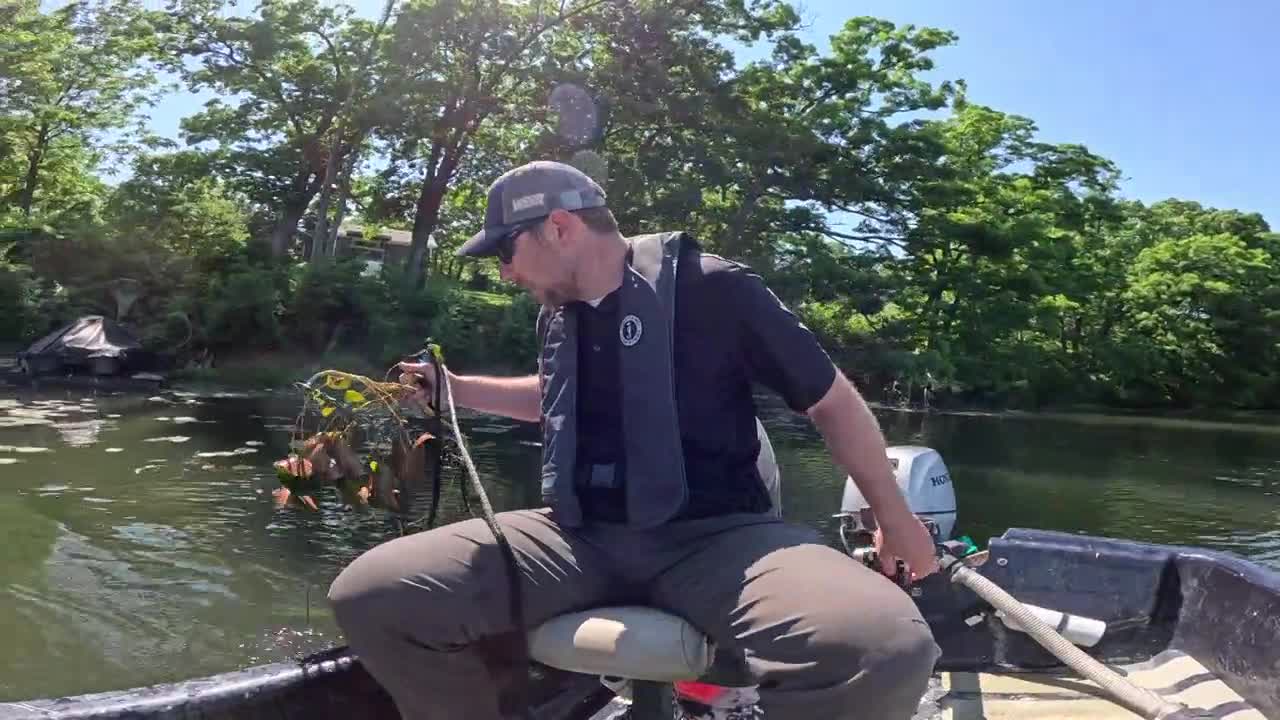
The first step in that process was Randy Kramer actually getting out on a boat to collect samples of the different vegetation that’s beginning to crowd the lake.
Later this summer, after the flowers have bloomed, Kramer will chemically destroy those plants.
“Probably early July will be our first treatment,” said Kramer, of Aquatic Control. “Then, we'll come back about four weeks later. You have to kill the roots, or else they just sprout right back. That's what the products do."
The lake won’t look pretty once that treatment starts.

"It will look horrible, 'cause all the plants are dying,” Kramer said. “What's green now is going to be black and brown. It's not going to take care of all of it, by no means. But it should be a much smaller percentage that comes back."
Kramer admitted it will likely take two to four years to "get rid of the majority of it."
Before he hit the water, Kramer answered residents’ questions about the chemicals he'll eventually use and what the treatment plan entails.
He confirmed that boating, fishing and even swimming will be totally safe during the chemical treatment process.

I talked to those neighbors, too.
"I thought that we were going to start probably in April, and that in May we could enjoy it," Jonne Santoli told me. “It's nice to have somebody come out. But it's not done, and we've had how many meetings? Years and years of meetings. Repetitive, and so you get frustrated."

The contract agreement states Jackson County will pay $7,815 to cover two chemical treatments by Aquatic Control. The company says the treatments will kill a minimum of 90% of the white water lilies within four weeks of treatment. The contract also stipulates that if that threshold is not reached, further treatment will be done at no cost.
The contract does not include the removal of the vegetation once it dies and sinks to the bottom of the lake.
Jackson County got bids from four companies, and only one included plans to kill and remove all the vegetation.

Water Wizard, a local company that was at Tarsney Lake in January when LeVota first spoke to residents in person, submitted that bid. The total was tens of thousands of dollars higher than Aquatic Control.
I spoke to Water Wizard's president, Cal Closson, about the bid. He told me he knew his company's bid would likely be the highest.
"A lot of people think that it's either one or the other. You're either going to remove with machinery, or you're going to use chemicals," Closson said. "Our feeling is that neither of those by themselves are the answer, but together they're a better answer than anything else out there."
READ MORE | Jackson County's Request for Proposal for Tarsney Lake vegetation control
LeVota told me Jackson County has already committed another $10,000 to Aquatic Control for next summer, once it's clear how this year's treatment fared.
“But right now, my biggest responsibility, if I'm not sitting in this chair, [is making sure] the next person here understands that Tarsney Lake is a Jackson County issue," LeVota said.
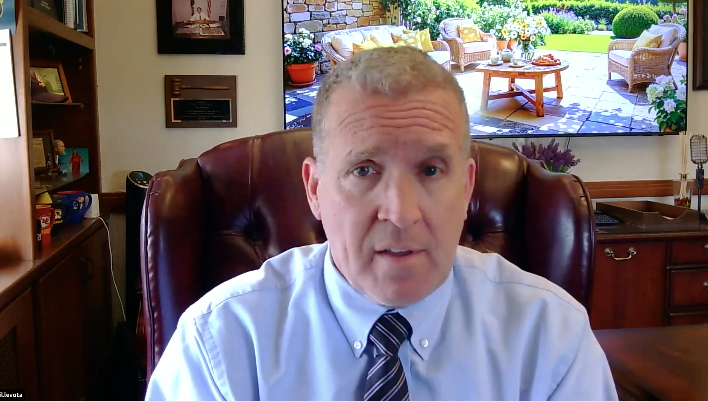
Ideally, LeVota said the county would "throw $100,000 at it and do everything." But just starting is something.
"I think we start here, accepting responsibility for it, doing something, and let's see how we move along," he said.
Closson says if that means his company gets another chance to bid next year, he'll be ready.
"We'd be happy to help," Closson said. "You know, we're residents of this county, we're passionate about caring for waterways and any opportunity we have to help the communities."

I've stayed in touch with Debora Corn, president of Tarsney Lakes Citizens Inc., for almost a year now.
Corn told me that she was hopeful Water Wizard's removal plan would be awarded the Jackson County bid. But she understands the financial limitations.
As far as she's concerned, LeVota is keeping the promise he made to her neighborhood.

"In the world we live in, and the money we have to work with, we should be thankful that we got something done after 25 years,” Corn said. “So I'm thankful for that. Promises made, promises kept."
Corn said in a perfect world, a one-time fix would eliminate the issue. However, that's not an option.
"That's not the way of the real world because we've got years of lily pads, the roots go deep," she said.
Corn told me that just seeing Kramer out on Tarsney Lake was progress, stressing it’s the first time in decades that someone paid by the county has examined the lake.
Still, the people who live around the lake are at least a few months away from knowing if the plan the county chose to pursue was the right one.
"I'm so glad you're here," Santoli told me. "Because this is maybe the first time that we will get help, but they'll follow through."
—

![092126_KSHB_WX_480x360[61].jpg](https://ewscripps.brightspotcdn.com/dims4/default/79e7fad/2147483647/strip/true/crop/480x360+0+0/resize/960x720!/format/webp/quality/90/?url=http%3A%2F%2Fewscripps-brightspot.s3.amazonaws.com%2F6f%2F6d%2Fa3758caf4c0984b0ecf100f620d1%2F092126-kshb-wx-480x36061.jpg)