

KANSAS CITY, Mo. — KSHB 41 reporter Isabella Ledonne reports on stories in Overland Park, Johnson County and topics about government accountability. She's reported extensively on synthetic 7-OH in the ongoing series, Strong High Weak Laws. Share your story idea with Isabella.
—
The state of Missouri is asking a Jackson County judge to stop all American Shaman sales of synthetic 7-OH while the attorney general's lawsuit moves forward.
During a hearing Monday morning, Missouri's solicitor general presented the state's argument for why a temporary restraining order blocking all 7-OH sales should be granted. Attorneys for American Shaman pushed back against the state's request, asking the judge to deny the order.
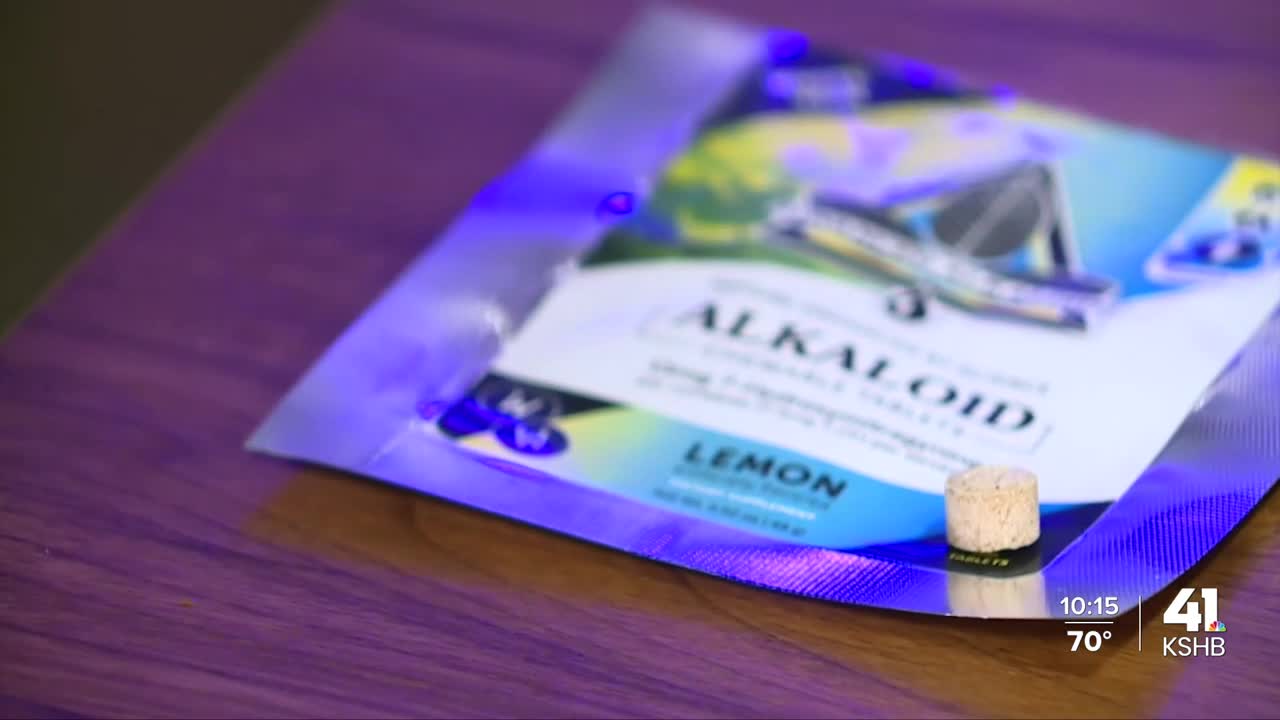
The state argued that synthetic 7-OH, a derivative of the natural plant kratom, has caused an emerging public health crisis in Missouri. Experts have told KSHB 41 News in our reporting of Strong High Weak Laws that synthetic 7-OH is stronger than morphine, causing opioid-like effects. The product is often referred to as "gas station heroin."
Much of the state's argument centered around state and federal laws that prohibit products from being sold as dietary supplements without prior FDA approval. The FDA has sent out warnings on the safety of synthetic 7-OH and seized more than 70,000 products from American Shaman's warehouses in Kansas City.
Solicitor General Louis Capozzi stated in court that synthetic 7-OH was involved in at least 197 Missouri deaths, and the rate of the total number of Americans using 7-OH was as high as oxycodone and fentanyl combined. He argued that Jackson County Judge Charles McKenzie should grant the temporary restraining order to prevent more deaths and addictions from 7-OH.
"The court should weigh lives more than dollars," Capozzi stated in court.
In response, attorneys for American Shaman argued there is not a public health crisis that can be linked with the emergence of 7-OH on the market. American Shaman's founder, Vince Sanders, claims they were among the first to create synthetic 7-OH and begin selling it on the market.
Sanders is listed as one of the defendants in the lawsuit, in addition to several 7-OH manufacturing companies, which Sanders also owns and operates in the Kansas City metro.
“Probably at least 100 7-OH brands in the country, and probably roughly half of which we make," Sanders told KSHB 41 News reporter Isabella Ledonne in a December interview.
S.J. Moore, one of Sanders attorneys in the case, stated there have been more than 1.4 billion doses of 7-OH sold around the country in the last three years since 7-OH hit the market. Moore argued that any deaths linked or associated with synthetic 7-OH are either linked to its parent plant, kratom, or are considered poly-substance deaths, usually involving other drugs like fentanyl or methamphetamine.
"If it were really causing deaths, you would be seeing deaths all across the board, but you're not," Moore stated in court.
Among the concerns listed in the lawsuit have been the scientific trials, or alleged lack of, for Missourians using 7-OH. Evidence submitted in court referenced a study done with rats and the effects of 7-OH. According to attorneys, the study gave rats a dose of 7-OH intravenously and saw that it caused respiratory depression.
Moore and American Shaman stated in court that humans "don't take [7-OH] like that," referring to the method in which rats were supplied with the product.
Sanders told Ledonne that the human trials for 7-OH have been customers buying it at American Shaman.
"7-OH hasn't had any human trials for regulations or anything like that?" Ledonne asked Sanders.
"That is correct," Sanders responded. "The human trials have been people choosing to use it."
Moore told McKenzie that if the order blocking 7-OH sales is granted, American Shaman will likely go out of business.
Synthetic 7-OH has been at the center of numerous ban attempts across the state, including an approved ban in Kansas City, Missouri. Kansas Gov. Laura Kelly recently signed a bill into law that bans the sale of synthetic 7-OH and its parent product, kratom. The products are now listed as Schedule I substances, the same category as heroin.
Missouri lawmakers proposed several bills at the beginning of this legislative session to ban 7-OH and attempt to regulate kratom. Back in February, Sen. Maggie Nurrenbern, who represents Clay County, proposed a bill that sought to get these products off shelves.
"I don't think there's anything more important than making sure that we are keeping these dangerous gas station drugs out of the hands of kids, out of the hands of vulnerable people," Nurrenbern told Ledonne. "It's my number one priority to get something done this year to keep our community members safe.”
However, lawmakers have not passed any of the proposed bills banning 7-OH, despite the urgency from the Missouri Attorney General's Office filing a lawsuit against the product's main manufacturer.
Following both the state's and American Shaman's arguments, Judge McKenzie asked Solicitor General Capozzi where the legislative efforts stand.
Capozzi responded by saying the 7-OH ban bills will "realistically" not get passed this year in the legislative session.
The state's attorneys declined to comment after the hearing, referring Ledonne to the press office for any inquiries. The Missouri AG's Office sent a statement in response.
"Our Office is using authority under the Missouri Merchandising Practices Act to stand in the gap to protect consumers from 7-OH, a dangerous and deadly opioid," a spokesperson wrote. "We hope Judge McKenzie recognizes the need for immediate relief and protections for Missourians. Attorney General Hanaway will continue to root out dangerous and illegal activities that threaten the well-being of consumers across the state."
Sanders and his attorneys also declined to comment on Monday's hearing.
Ledonne reached out to the Missouri lawmakers who proposed bills to ban 7-OH and asked why there has not been any progress, but she did not hear back by the time of this story's publication.
McKenzie stated he expects to have a ruling on the temporary restraining order by the end of the week.
—