



JOHNSON COUNTY, Kan. — KSHB 41 reporter Olivia Acree covers portions of Johnson County, Kansas, including Olathe and Lenexa. She will continue to follow up on declining enrollment and school funding. If you have thoughts or concerns about your own school district, please reach out. Share your story idea with Olivia.
—
Johnson County school districts say they have been underfunded on special education by the Kansas legislature since 2011, forcing tough choices that impact every student.
TJ Finan is a special education teacher in Johnson County who sees the impact firsthand.
"My favorite part of the job is the little celebrations, day in and day out," Finan said.
However, Finan noted that stretching limited resources is becoming more common.

"Sometimes, you know, understaffing is a thing. Sometimes, underfunding can be an issue," Finan said. "You got to think outside the box a little bit and make sure block by block and day by day, kids are covered."
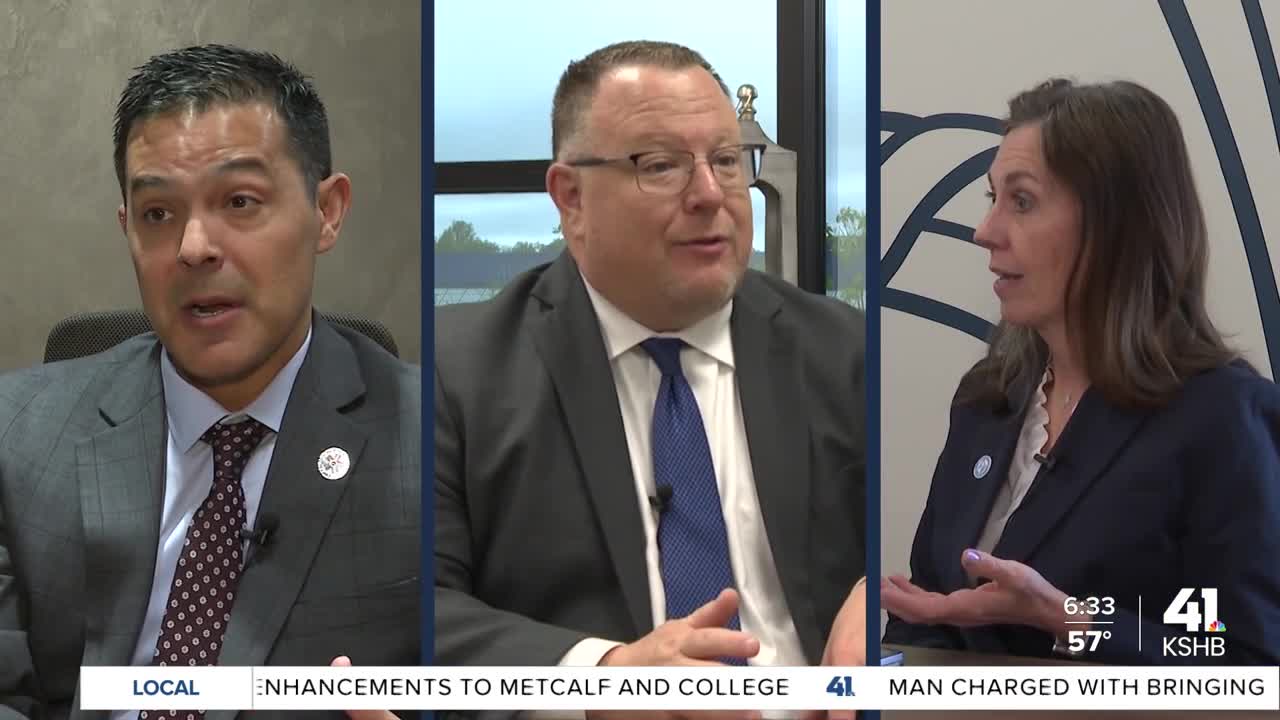
Superintendents across Johnson County, including Mike Schumacher of the Shawnee Mission School District, Brent Yeager of Olathe Public Schools, and Gillian Chapman of Blue Valley Schools, have joined forces to address the problem. They say the state is not paying the 92% it is legally required to provide for special education.
"Last year, what was funded by state and fed was about 45% for Shawnee Mission. That means we have to take care of the rest," Schumacher said.
The "rest” adds up quickly for the districts.
"We transferred $44 million out of our general fund," Yeager said. “The reality is, special education is fully funded in the state of Kansas, but we're using our local tax dollars and our general funds to do it.”

The superintendents explained the numbers break down to about $1,400 per student pulled from general education funds, and they do not have a choice in the matter.
"We can't say, ‘I'm sorry we no longer can offer that individualized program for your child because we don't have money.’ That is actually illegal," Chapman said.
To adjust, districts are scaling back resources, asking voters for money, and leaving positions unfilled.
"We got a recommendation from our buildings to add about 70 positions that would support those needs of our kids. We said, no, we couldn't add them," Schumacher said.
Jennifer Jarrell is a Blue Valley mother who thinks the legislature’s shortfall is, unfairly, becoming a problem for all students.

"My student is in special education, but they're also part of all of the other aspects of Blue Valley services, programming, teacher pay so forth. We're shortchanging every student over here," Jarrell said.
Districts are making do with what they have now, but as needs grow in special education, the gap is getting harder to manage.
"When you're chronically underfunding and ignoring your own statute, that is at the detriment of children," Chapman said.
Finan does not want the shortfall to show up in the classroom.
"Every kid deserves the same attention as every other kid," Finan said.
For the next school year, the legislature added an additional $6 million in special education funding. District leaders say they will continue pushing lawmakers to fully fund special education at the 92% requirement.
The current school funding formula will sunset in 2027. The legislature could renew it or write a new school finance formula.
This story was reported on-air by a journalist and has been converted to this platform with the assistance of AI. Our editorial team verifies all reporting on all platforms for fairness and accuracy.
—

![092126_KSHB_WX_480x360[61].jpg](https://ewscripps.brightspotcdn.com/dims4/default/79e7fad/2147483647/strip/true/crop/480x360+0+0/resize/960x720!/format/webp/quality/90/?url=http%3A%2F%2Fewscripps-brightspot.s3.amazonaws.com%2F6f%2F6d%2Fa3758caf4c0984b0ecf100f620d1%2F092126-kshb-wx-480x36061.jpg)