



KANSAS CITY, Mo. — KSHB 41 reporter Rachel Henderson covers neighborhoods in Wyandotte and Leavenworth counties. Share your story idea with Rachel.
—
A Belarusian woman released from ICE custody is speaking out about the medical care she received at a Leavenworth detention facility. Records from the facility itself and the hospital that treated her paint a detailed picture of what happened in the weeks before she was hospitalized.
Katsiaryna Bartko, 33, was released from the Midwest Regional Reception Center on Sept. 16, just days after being hospitalized on Sept. 12.
She sat down for an interview Tuesday before leaving Missouri for Florida, with a translator who translated portions of the interview from Russian.
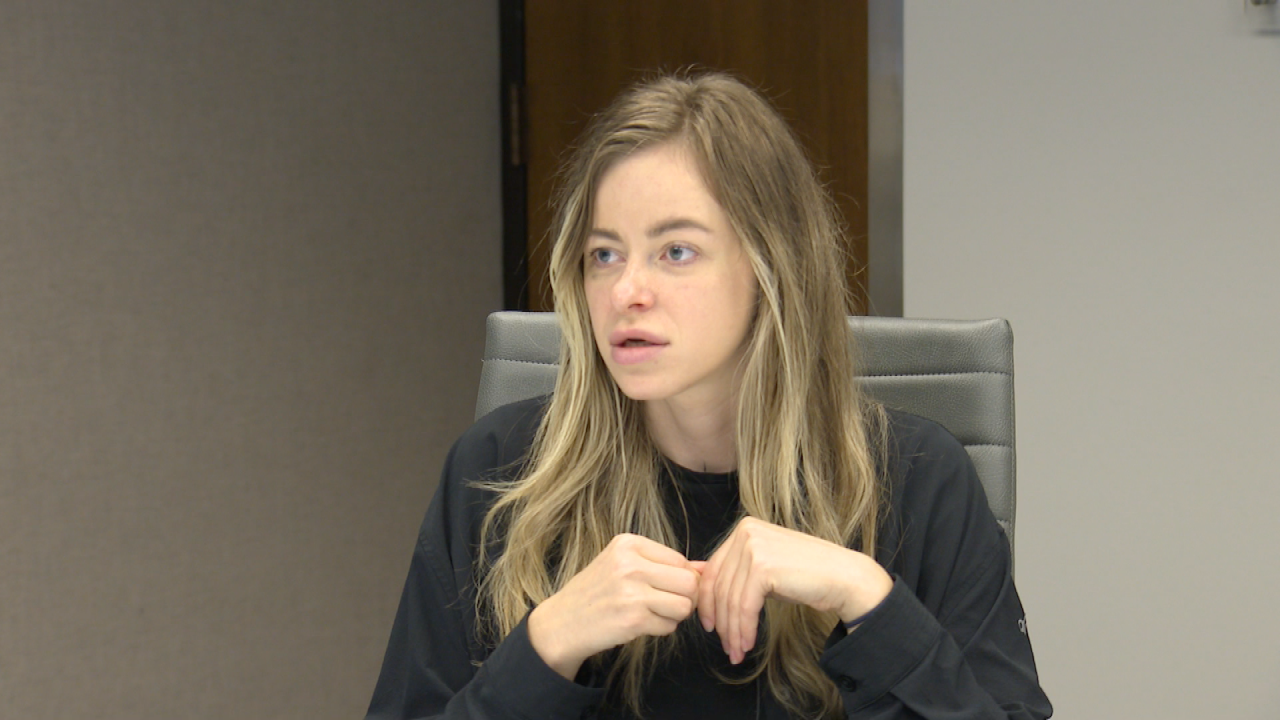
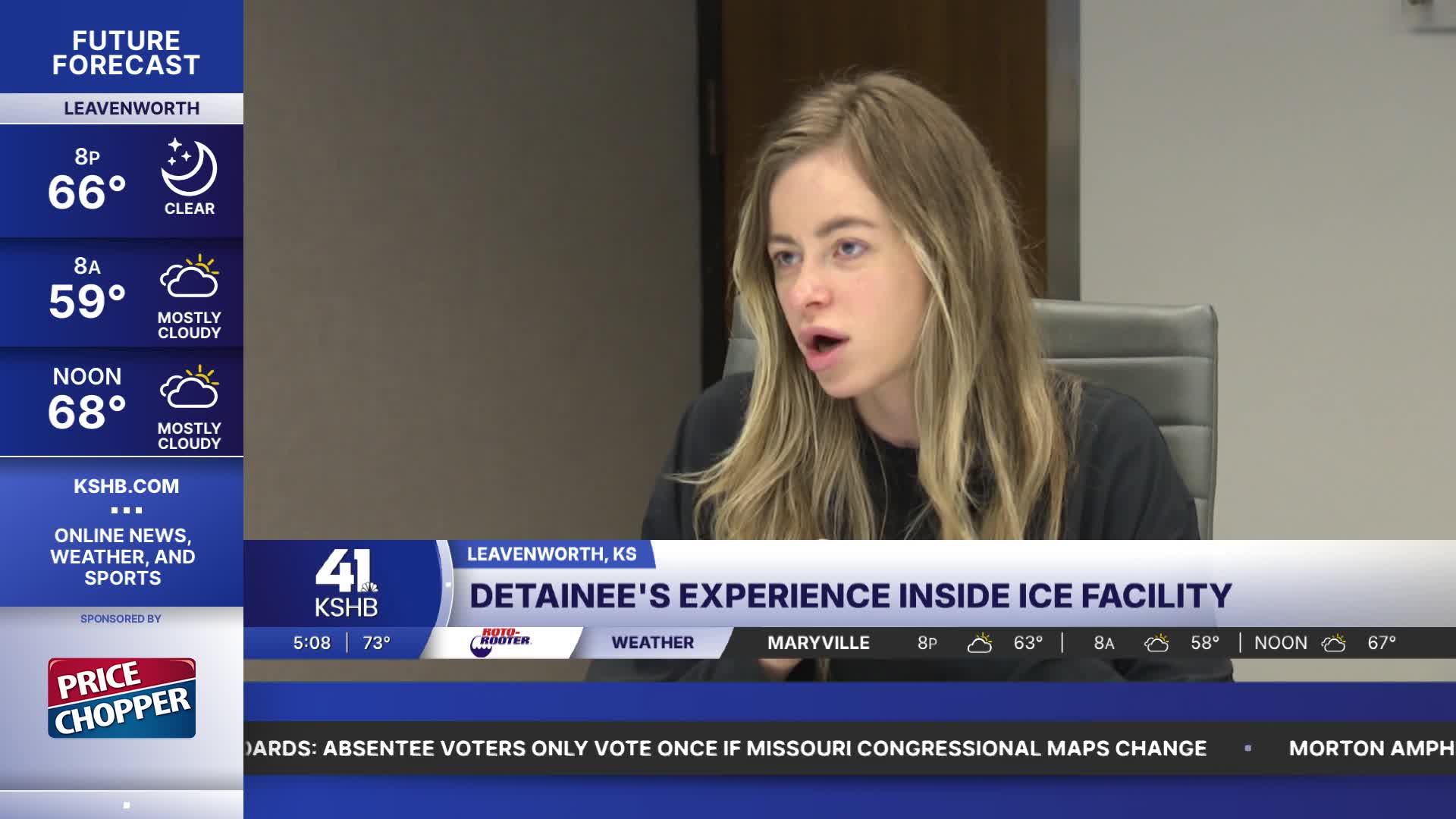
"I'm much better, but now, I stay in long road for my recovery," Bartko said.
Bartko arrived at the Leavenworth facility in June after being detained in Florida.
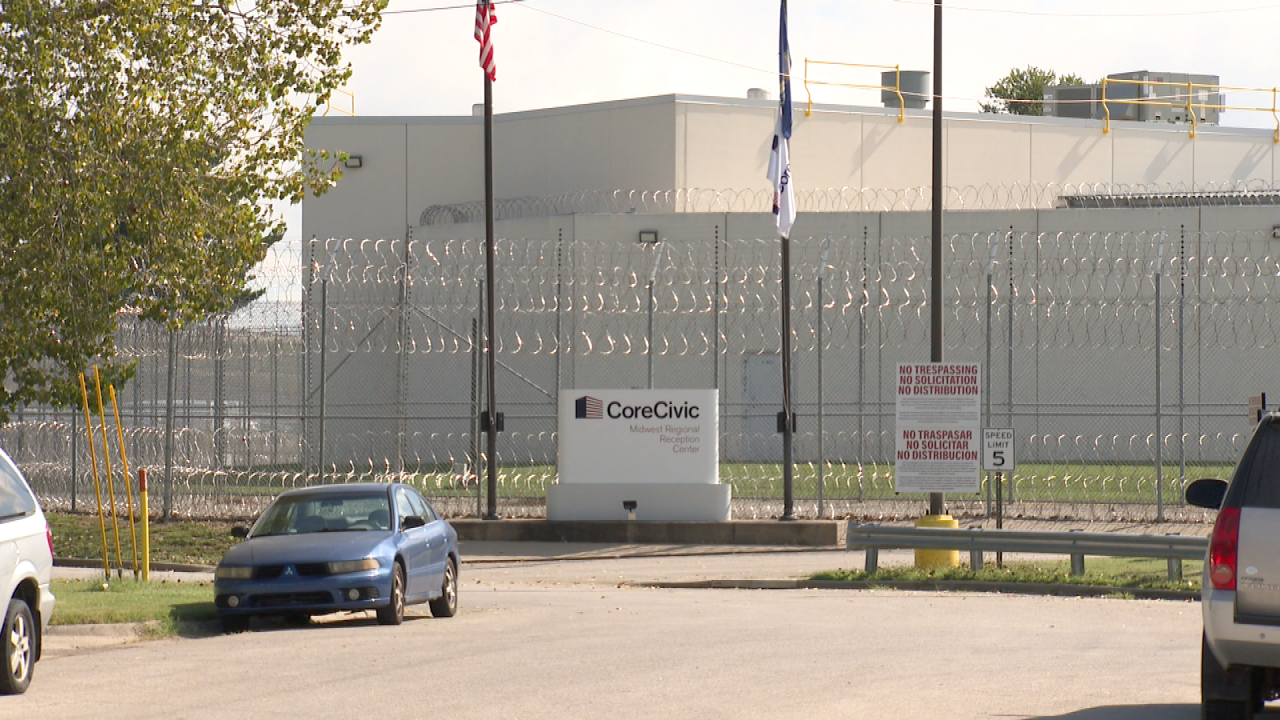
The Midwest Regional Reception Center was sold by CoreCivic, but it is still managed by the company. She described the general living conditions as adequate.
"When I stay in CoreCivic, it's like detention building, it's not bad. Because we have room, we have unit for all people, we have shower, we have food, we can watch TV, coloring book, read book," Bartko said.
But after three months at the facility, Bartko said the medical care was a serious problem.
“We have problem with medical," Bartko said. "No qualification, medical support. We have no schedule good for medical pills first day because when I come in, I don't have my pills in first day.”
As a thyroid cancer survivor, Bartko's body can no longer produce thyroid hormones or regulate calcium on its own, so she said medication is mandatory to keep her alive.
She said she went days at the facility without that medication.
Through translation, Bartko described her condition deteriorating after her medication was withheld within the first few days — she experienced dizziness, weakness, spasms and tingling in her fingers and face. She said she warned staff every day that she needed her pills and felt herself getting worse.
Medication withheld from beginning
According to her attorney-in-fact, despite Bartko's diagnosis being confirmed with CoreCivic staff, there was no reason her medication was withheld from the first day through nearly two weeks later.
An attorney-in-fact is a person legally authorized to act on behalf of someone as outlined in a power of attorney document.
Her representative’s notes said Bartko arrived at the Leavenworth facility in June with her own levothyroxine, the thyroid hormone she has taken since her cancer surgery. On June 23, the facility took it away. The facility's own medication log shows the hormone marked as not given for the next 10 days, through July 2, and she was not receiving it consistently until the second week of July. For the rest of June, the same log shows no calcium or calcitriol recorded at all — medication she also needs daily because she has no parathyroid glands.
At a Sept. 4 federal court hearing, her attorney-in-fact said the government's own attorney acknowledged she went about eight or nine days without the hormone.
When the medication was given, her representative said it was given outside any medical protocol. Levothyroxine must be taken in the morning on an empty stomach and not with calcium because calcium blocks its absorption.
The facility's own medication orders state the two should not be taken within four hours of each other. Notes said they were brought to her together at the facility. The hospital's endocrinologists later documented the same finding.
The dose was also changed repeatedly — cycling between 112 and 150 micrograms — always by a nurse practitioner, never by an endocrinologist. Her attorney-in-fact said Bartko was never seen by an endocrinologist during her entire time in custody.
At the Sept. 4 hearing, he said the judge asked the nurse practitioner on what basis she had been making those adjustments. Bartko's thyroid test results over that period were 86.76 in July, 148.77 in August and 119.91 on admission to the hospital, against a normal range of 0.40 to 4.50.
What the facility's own records show
Bartko's representative shared medical records from before and after her Sept. 12 hospitalization. Those records, reviewed by KSHB 41 News, show a series of escalating warning signs in the two weeks before she was sent to the hospital.
Blood drawn at 4 a.m. Sept. 10 was held at the facility for 48 hours before being sent to a lab. When results came back, her calcium was above 15.0 mg/dL — flagged by the laboratory as a critical value requiring an immediate call to the ordering physician. Her kidney function marker, creatinine, had risen from 0.95 on Aug. 28 to 1.58, with an eGFR of 44, also flagged as critically low.
The full results did not enter the facility's own system until Sept. 15, five days after the blood was drawn and three days after Bartko had already left for the hospital.
The facility's doctor, who records show never examined Bartko in person during her time in medical isolation, wrote on the evening of Sept. 11 that she did not believe a medical emergency existed, noting the lab results had not yet come through the portal.
On Sept. 8, Bartko asked a nurse to be taken to an emergency room. The nurse refused and recorded that Bartko was in no distress and eating well. That same nurse's note from that evening recorded that Bartko was "Feeling ill. Vomiting." The nurse also noted that Bartko asked for a translator because she could not understand the nurse's explanation.
On Sept. 9, the facility's doctor ordered Bartko released from medical isolation and returned to general housing. A nursing note that same night recorded that she remained in medical isolation. She stayed there until she was driven to the hospital on Sept. 12 by a facility van, not by an ambulance.
Records also show that on Sept. 9, an endocrinology referral was dated for Dec. 9, with a status of "Need Information — Financial Authorization." That date was 11 days after ICE told a federal judge under oath that the appointment was expected in the first half of October.
On Sept. 11, Bartko's phone and tablet were taken. Her representative, who holds a notarized power of attorney and had a signed medical release on file with the facility, was not notified when she was transferred to the hospital on Sept. 12.
Her court-appointed lawyers learned of the transfer on the morning of Sept. 14, when the facility refused a scheduled legal call because she was not there. ICE declined to tell them which hospital she was in, citing operational security. That evening, the government filed a notice in federal court stating her medical care was "no longer a live controversy."
What hospital staff found
The hospital's records, also reviewed by KSHB 41 News, identified the cause of Bartko's calcium crisis. The hospital's endocrinology service concluded her hypercalcemia was due to excessive intake of calcium, noting her dose had been changed at the facility.
The attending physician of record noted a drug typically used to treat high calcium from disease was withheld after the team discovered the facility had overdosed her on calcitriol, the active form of vitamin D used to raise calcium levels.
The hospital also found her thyroid medication had been given improperly. Records show she had been taking levothyroxine at the same time as calcium supplements — a combination the facility's own medication orders warned against. Her thyroid-stimulating hormone on admission was 119.91, against a normal range of 0.40 to 4.50. The hospital returned her to the 112 mcg dose she had taken for years without issue.
The hospital's dietitian diagnosed severe malnutrition and attributed it to her detention, noting significant weight loss, severe muscle wasting and fat loss, and that she had been meeting less than 50% of her nutritional needs. Her weight was about 115 pounds. The facility had not recorded her weight since June 21.
Her kidneys had also been injured. The creatinine level recorded on the facility's Sept. 10 blood draw reflected roughly half of normal kidney function for a woman her age. With intravenous fluids at the hospital, her kidney function recovered, and the physician's problem list listed her elevated creatinine as resolved — no permanent kidney damage was documented.
Bartko arrived at the hospital shackled to the bed by her feet and left arm, with ICE officers present throughout her stay. The emergency physician noted she had been hospitalized three times for hormonal imbalances since entering ICE custody in early June, and that she said she intermittently received her medication, but she was not getting it daily.
When the hospital's nurse case manager called the facility on Sept. 15, the facility's assistant health services administrator said there had been no missed doses in the days leading up to admission. The facility's own medication record for Sept. 11 shows codes indicating medication was not given or was out of stock.
Bartko said she was grateful to the hospital's medical staff.
"I'm on the long road to my recovery, and thanks again to the medical staff of The University of Kansas Hospital. They kept me alive and managed the emergency condition, however, I need to maintain my health in order to get back where I was, as well as get back on the track of my own life," Bartko said through the translator.
Chained throughout her hospital stay
Bartko described learning she was being released while still in her hospital room.
Through the translation, she said she was chained to the hospital bed the entire time she was admitted, including during blood tests and other medical procedures, which she said interfered with the doctors' work. When she was taken to the restroom to shower, she said she was fully body chained.
She said her release came as a complete surprise.
"It was a complete surprise for me because I got no communication, so I realized I was being released only in the moment when it just happened. And it basically helped me to recover faster because the changing of the condition affected me in a better way," Bartko said through the translator.
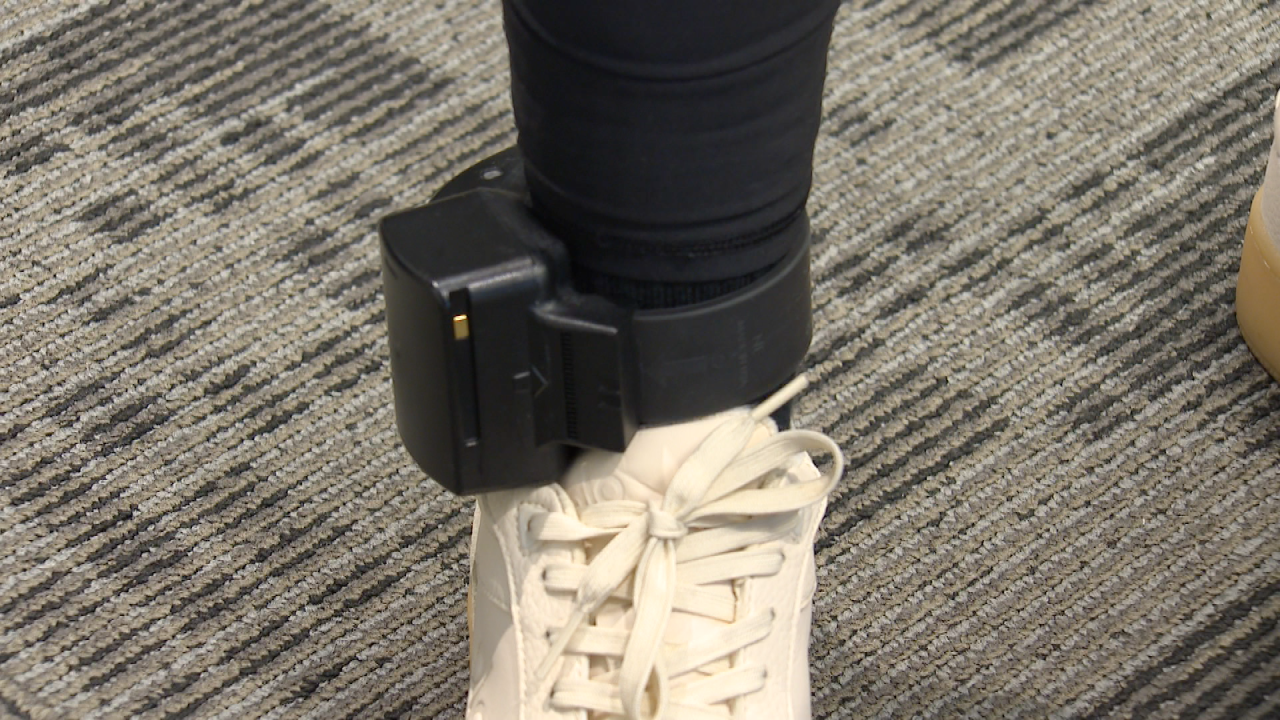
She also received a GPS ankle monitor in the hospital as an alternative to detention, pending proceedings.
Other detainees
Bartko said she was not the only detainee facing medical care issues, describing a pattern of neglect and indifference. This aligns with what an advocate with Leavenworth Community Response told KSHB 41’s Rachel Henderson on Sept. 15.
Through translation, Bartko said other detainees were missing dosages, especially for life-sustaining medications like insulin for diabetics.
"With those people, you can literally see they're not being taken care of," Bartko said through translation.
Arrest and immigration status
In its statement, DHS described Bartko as a "criminal illegal alien" and cited a May 5 arrest for battery domestic violence as the basis for her detention.
Her attorney-in-fact said the arrest stemmed from a March incident in which police were called to a party, after Bartko had already left, where a verbal argument had broken out. Under Florida's domestic violence booking protocol, he said any call classified as a domestic disturbance is booked as domestic violence.
The state attorney declined to prosecute, entering a "No Action" disposition on June 2. The case was closed and the record later sealed. No charge was ever filed, and Bartko has no conviction.
On Bartko's immigration status, DHS said her visa status was terminated on March 2, 2023. Her representative said Bartko applied for asylum in February 2023, while still in valid student status, and that U.S. Citizenship and Immigration Services confirmed in writing that she could remain in the United States until her application was decided. He said USCIS never interviewed her or decided on her application in the three and a half years since.
DHS response
A DHS spokesperson said in a statement sent Tuesday that Bartko received proper medical care and treatment for hypothyroidism and hypocalcemia, and that DHS worked with the hospital to ensure she was covered.
The statement also said it is a longstanding practice to provide comprehensive medical care from the moment a detainee enters ICE custody, including medical, dental and mental health intake screenings within 12 hours of arriving at each detention facility, a full health assessment within 14 days, and access to medical appointments and 24-hour emergency care.
Her attorney-in-fact noted that DHS sent a nearly identical statement to another news outlet on Aug. 27 — more than two weeks before Bartko was hospitalized — using the same language about proper medical care and treatment. He said the statement did not change after the hospitalization, critical lab results, kidney injury or malnutrition diagnosis.
City of Leavenworth update on facility
Leavenworth City Manager Scott Peterson said Wednesday the city is still waiting on a finalized management agreement between CoreCivic and DHS.
"We are still mostly in a holding pattern. I don't believe CoreCivic and DHS have finalized their management agreement still," Peterson said. "It sounds like we will still have a community relations board moving forward — CoreCivic has indicated they want to maintain it in some fashion, although the final product may change."
What's next
Bartko said she plans to focus on her recovery and her immigration case.
"I'll be working and maintaining immigration proceedings regarding my immigration case. That's basically it, those are main priorities right now," she said through the translator.
She said she is grateful for the public support she received.
"I want to thank all the people in Kansas for putting their voice out just because this social awareness of what is happening helped to maintain my condition and basically help me to stay alive," Bartko said through translation. "And to all the people that's been detained and their close ones, I want to say to never give up, just do what you can do within the due process, according to the law, and helping to maintain this and going through the process as it should be literally will help you to survive and make it alright.”
Bartko was discharged from the hospital on Sept. 19. She must report to ICE in Miami, Florida, on Sept. 30, and she has an immigration court hearing in Kansas City next week.
This story was reported on-air by a journalist and has been converted to this platform with the assistance of AI. Our editorial team verifies all reporting on all platforms for fairness and accuracy.
—

![020626_KSHB_Image_NXA_Web_Standard Cube[88].jpg](https://ewscripps.brightspotcdn.com/dims4/default/0ead409/2147483647/strip/true/crop/300x225+0+13/resize/960x720!/format/webp/quality/90/?url=http%3A%2F%2Fewscripps-brightspot.s3.amazonaws.com%2F8f%2F6c%2Ffad8bd2346c5a4d4ead793017d4a%2F020626-kshb-image-nxa-web-standard-cube88.jpg)