




LEAVENWORTH, Kan. — KSHB 41 reporter Rachel Henderson covers neighborhoods in Wyandotte and Leavenworth counties. Share your story idea with Rachel.
—
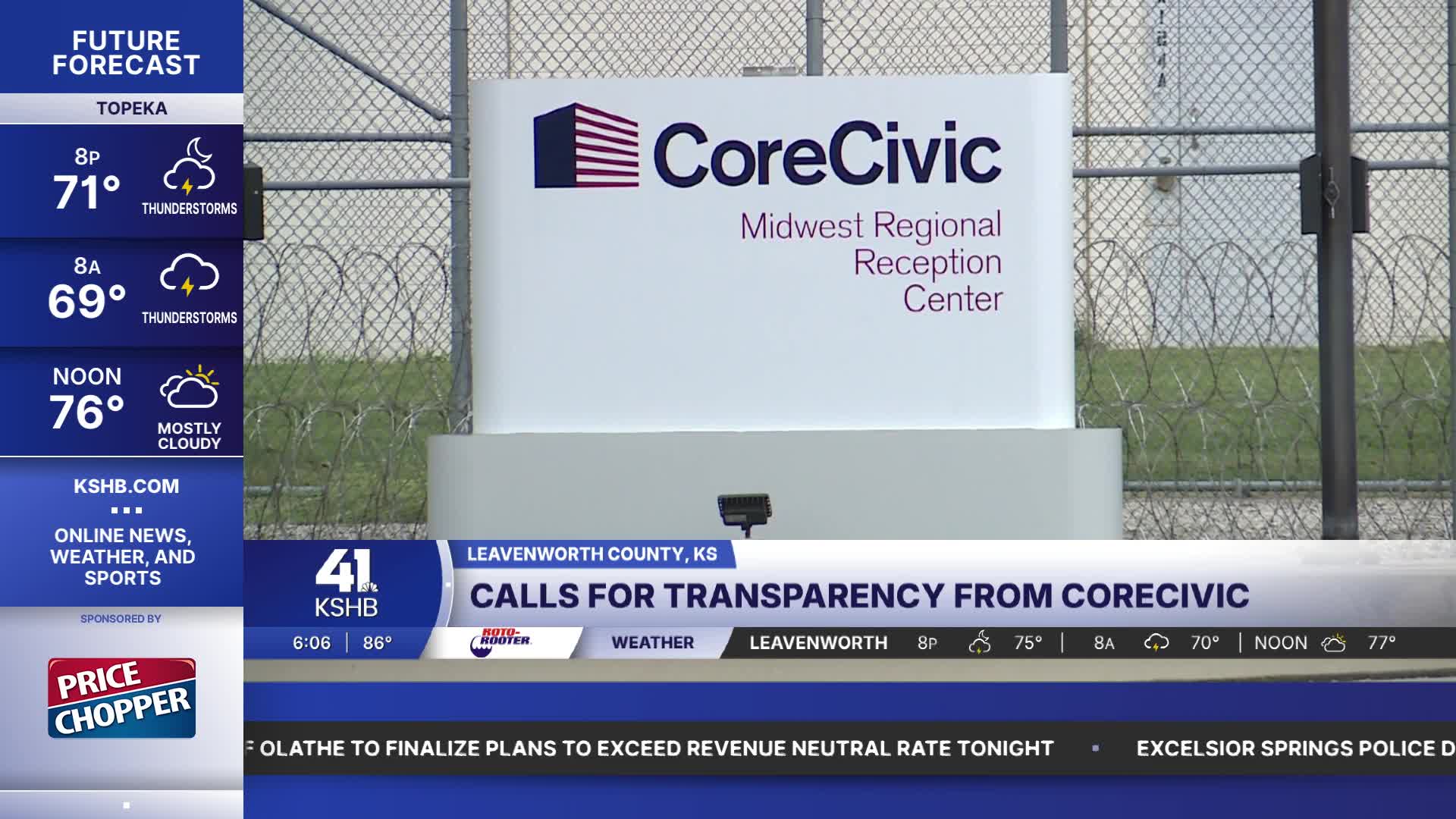
A Leavenworth community group and the partner of a woman in ICE custody are demanding transparency from CoreCivic and the Department of Homeland Security after the woman was hospitalized without her family or attorney being notified.
Katsiaryna Bartko, known as Kate, is a 33-year-old thyroid cancer survivor originally from Belarus, a European country bordering Ukraine and Russia.
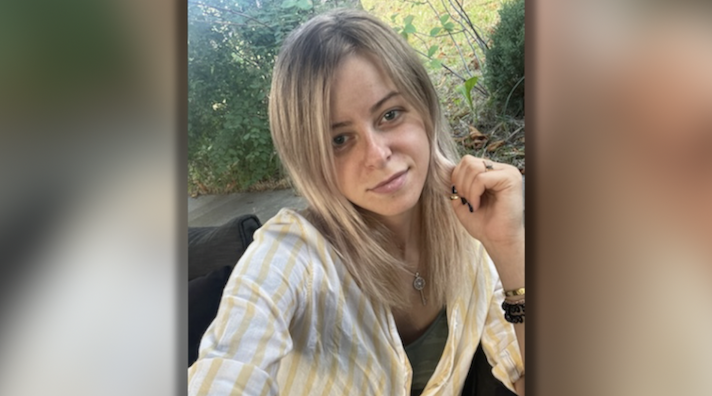
She came to the United States seeking asylum and had a student visa that expired in March 2023.
U.S. Citizenship and Immigration Services told her she could stay until her asylum application was decided.
In May 2026, Kate was arrested in Florida on a misdemeanor charge that was later closed.
She remained in a Florida county jail before being transferred to ICE's Miramar Field Office on June 4, the same day she received a notice to appear from DHS.
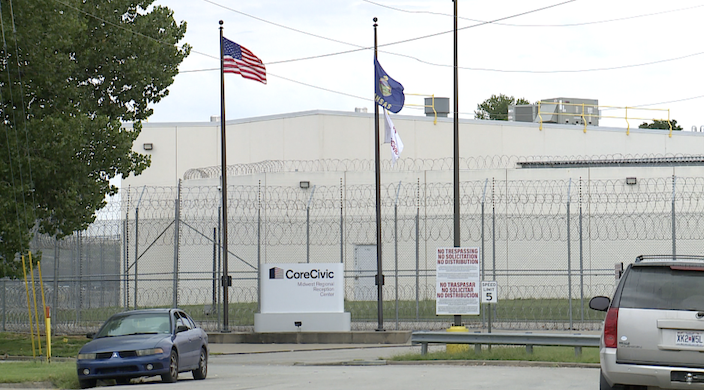
She has been held at Leavenworth's Midwest Regional Reception Center since June 18 — 104 days.
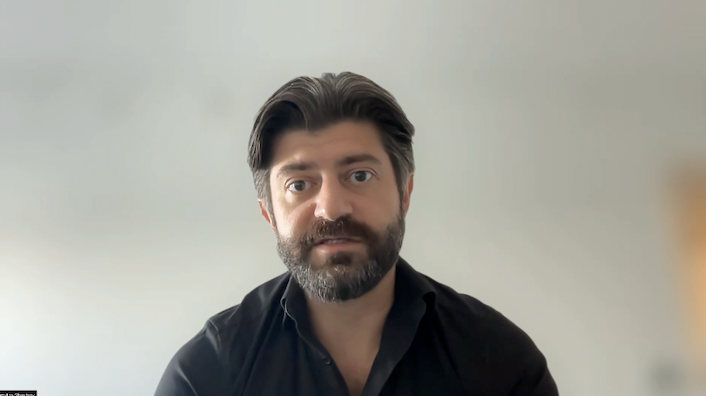
Her partner and authorized medical records recipient, Dmitry Shyshov, says her medical condition has significantly deteriorated since then.
Medical records and evaluations from professionals have also confirmed this.
"Primary concern is to see her again,” Shyshov said. “To say to her that I love her.”
Kate is currently suffering from two life-threatening conditions: low calcium and high thyroid hormone levels.
Her condition requires daily medication to keep those levels stable.
Shyshov has been tracking her medical records, which show declining levels for both.
He says three declarations from three different doctors confirm both conditions can be lethal.
"Those conditions can be fatal, and they can escalate in hours," Shyshov said.
Shyshov says Kate's current symptoms include kidney pain, digestive system issues, headaches, spasms, and seizures.
He says she requested emergency room care twice and was denied both times.
CoreCivic's own documents cited as one reason for the denial that she showed no distress and was eating well.
"Last week, I was talking to the attorney, and I was telling her literally she has days left," Shyshov said.
Shyshov added that Kate was placed in isolation in the medical unit for two weeks and was not provided calcium on the first day of medical observation.
He says in court that officials said the earliest an endocrinologist could be provided was the first half of October.
However, CoreCivic's own records from six days later show the appointment was set for the first week of December.
Shyshov says Kate was hospitalized Sunday after new blood work was drawn Thursday.
Neither he nor her attorney was informed.
He says he learned about it by accident through an email exchange between her attorney and an assistant United States attorney.
"She simply just rapidly texted me that they are taking my communication away, and that was it," Shyshov said.
Shyshov says Kate was also forbidden from communications after the blood draw and failed to appear on two attorney calls — one the previous week and one Monday morning.
Because of her condition, the two had tried to stay in contact every 60 to 90 minutes.
"That is actually how we became aware that something is going on, just because two attorney calls missed already means something," Shyshov said.
In the email exchange, the U.S. attorney wrote: "As I understand it, Ms. Bartko was transferred to a Kansas City hospital on orders by a doctor yesterday. Due to operations security, ICE has advised they cannot release the hospital name or location."
I reached out to CoreCivic about her condition on September 3, and they said Kate was being monitored regularly.
A federal judge in Kansas City heard her emergency motion in person on September 4 and has not yet issued a written order.
The hearing was on Bartko's petition for a temporary restraining order and preliminary injunction, filed under 28 U.S.C. § 2241. The case is captioned Bartko v. Mackey, No. 5:26-cv-03290-DDC (D. Kan.).
He initially scheduled a telephone conference about her hospitalization for Tuesday, which was cancelled.
When I reached out again Monday, they said they could not comment because of privacy laws.
"We are unable to comment on a specific individual's medical record due to our own policies, those of our government partners, and restrictions tied to medical privacy laws, such as HIPAA," the representative wrote in an email.
They also suggested reaching out to ICE, which I did.
As of Tuesday, I'm still awaiting a response.
Shyshov says he is still waiting for medical records from before and during the hospitalization.
"She was already in a very severe condition, and I want to understand literally what is happening to her and how she ended up in the hospital," Shyshov said.
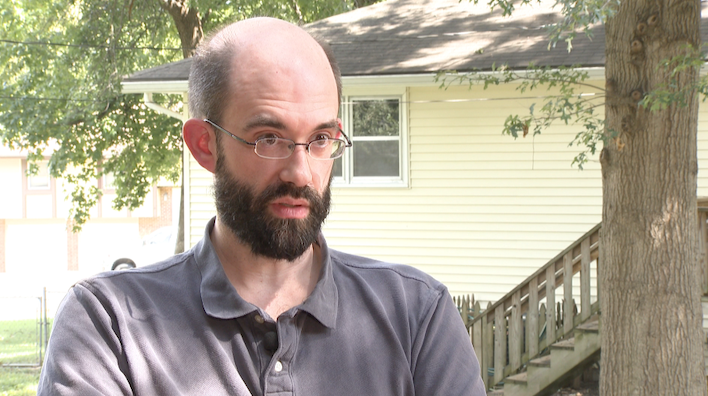
Dan McIntosh, a Leavenworth resident who is part of a group called Leavenworth Community Response, says the communication breakdown is not surprising.
They materialized after the ICE detention facility was authorized to open in March.
It’s since been sold to DHS while CoreCivic manages operations.
The group's ultimate goal is to secure the best possible outcome for detainees.
"The communication throughout this entire thing has been terrible," McIntosh said.
McIntosh says the group became aware of Kate's situation after someone directed them to a Newsweek story, and they tracked down Shyshov from there.
He says the group dealt with three other medical situations over the summer, and all four cases involved detainees with pre-existing conditions.
He says a concern is that acute medical issues are being evaluated over Telehealth rather than by a doctor in person.
"From the medical professionals I've talked to, those symptoms in and of themselves should have been enough to get her into an emergency room, but she was denied twice," McIntosh said. "Why did the lawyers not find out that she was in the hospital with a case pending on her medical treatment? Why was her legal team not informed until two days after she went into the hospital? The only reason they found out is because they had a scheduled call with her, and when they called, they said, 'Oh, she's not at the facility.' That's not okay.”
He says the pattern points to deeper systemic problems.
"If they cannot provide that level of care, then they should not be detaining those individuals," McIntosh said. "It's a testament to the fact that this entire system is based on a model of deterrence. It's not based on a model of the dignity of the individual, especially things like processing asylum.”
McIntosh is calling on CoreCivic and ICE to be more open about where detainees are being held and to overhaul how medical needs are handled at the facility.
"We would like to see either a drastic revamp of the medical situation inside this facility, or the acknowledgement that they're not capable of handling the medical needs of folks that are coming in with pre-existing conditions," McIntosh said. "If they can't handle these situations, they need to let these people out on bond, let their medical situations get resolved, and let the things play out in court. There's absolutely no reason to be detaining these people.”
Shyshov says the situation has left him fearing the worst and questioning the system Kate turned to for protection.
"She fled Belarus because she was afraid to be tortured in political prison by medical neglect. Can you imagine what she's experiencing right now? In the place where it's the people whom she asked for an asylum," Shyshov said. "I don't know where she is, how she is, if she's still alive, if she's in a coma, if she's conscious, and if I will ever see her again.”
Kate's asylum hearing is scheduled for September 28.
Shyshov still maintains a website documenting Bartko's case, including a timeline of her lab values, facility documents and court filings, at kateredemption.com.
This story was reported on-air by a journalist and has been converted to this platform with the assistance of AI. Our editorial team verifies all reporting on all platforms for fairness and accuracy.
—

![020626_KSHB_Image_NXA_Web_Standard Cube[88].jpg](https://ewscripps.brightspotcdn.com/dims4/default/0ead409/2147483647/strip/true/crop/300x225+0+13/resize/960x720!/format/webp/quality/90/?url=http%3A%2F%2Fewscripps-brightspot.s3.amazonaws.com%2F8f%2F6c%2Ffad8bd2346c5a4d4ead793017d4a%2F020626-kshb-image-nxa-web-standard-cube88.jpg)