




LEAVENWORTH, Kan. — KSHB 41 reporter Rachel Henderson covers neighborhoods in Wyandotte and Leavenworth counties. Share your story idea with Rachel.
—
CoreCivic has sold its Leavenworth, Kansas, detention facility to the Department of Homeland Security for $238.4 million, a move that has left city officials and residents questioning what comes next.
The Leavenworth facility, known as the Midwest Regional Reception Center, was one of two detention facilities CoreCivic sold to the federal government.
The other is Prairie Correctional Facility in Minnesota.
The city of Leavenworth says it was notified on the morning of Aug. 5 by CoreCivic representatives that the sale had been completed.
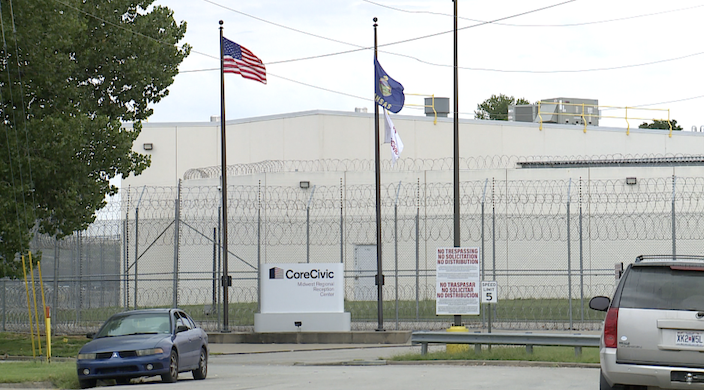
CoreCivic also made the announcement in a press release that same day.
The city says it has not had any direct communication with DHS or ICE regarding the sale.
"We remain committed to the open dialogue between the City and CoreCivic that we have established over these last few months. We are reviewing the available information in consultation with our legal counsel and do not have any further comment at this time," the city said in a statement.
A lengthy dispute
The facility opened in March after a lengthy dispute between the city and CoreCivic over a special use permit.
As part of that agreement, CoreCivic was required to pay annual fees and property taxes to the city.
In March, CoreCivic committed to paying the city of Leavenworth a one-time impact fee of $1,000,000, a $250,000 annual impact fee, and an additional $150,000 annual impact fee to the police department.
This is in addition to the over $1,000,000 in annual property taxes CoreCivic already pays.
The Leavenworth City Manager confirmed in March that the city planned to use the one-time impact fee to cover legal fees.
The city continues to provide services to the facility, including fire and police.
CoreCivic's response
CoreCivic said it expects to continue operating the facility under its existing management contract with ICE. However, the company noted the terms of that contract may be modified following the change in ownership and that its continued management of the facility is not guaranteed.
In a statement Tuesday, Ryan Gustin, CoreCivic's senior director of public affairs, said both facilities were purpose-built for secure detention and that the transactions were conducted with transparency.
"CoreCivic has completed the sale of two additional detention facilities — the Midwest Regional Reception Center and Prairie Correctional Facility — to the federal government. Both facilities were purpose-built, specifically designed to care for individuals in a secure environment. Asset transactions of this nature are not uncommon for government," Gustin said.
Gustin said the sale price was determined through a federally required appraisal process.
"The process was marked with rigor and integrity,” Gustin said. “The facility valuations were established through the federal government's required appraisal process, which is designed to determine objective fair market value. For these specialized properties, independent appraisers used a transparent cost-based methodology grounded in current replacement cost, depreciation, land value, and other market-based factors, with the appraisals then reviewed by the government for compliance with federal standards.”
Gustin said CoreCivic expects to keep running both facilities.
"CoreCivic expects to continue managing both facilities under existing contracts with ICE," Gustin said.
DHS response
A spokesperson for DHS from ICE Public Affairs Midwest sent KSHB 41's Fernanda Silva the following response on Aug. 5:
"ICE purchased Appleton Detention Facility and Leavenworth Prison for detention space. Every day, DHS is conducting law enforcement activities across the country to keep Americans safe. It should not come as news that ICE will be making arrests in states across the U.S. and ensuring we have resources to carry out President Trump’s mission.
“ICE is targeting criminal illegal aliens including murderers, rapists, criminals, gang members and more. Thanks to the One Big Beautiful Bill, ICE has new funding to expand detention space to keep these criminals off American streets before they are removed for good from our communities.”
Public administration expert
Dr. Susan Keim, an associate professor of public administration at Park University, said the sale was not entirely surprising.
She's also been following the back-and-forth between both parties.
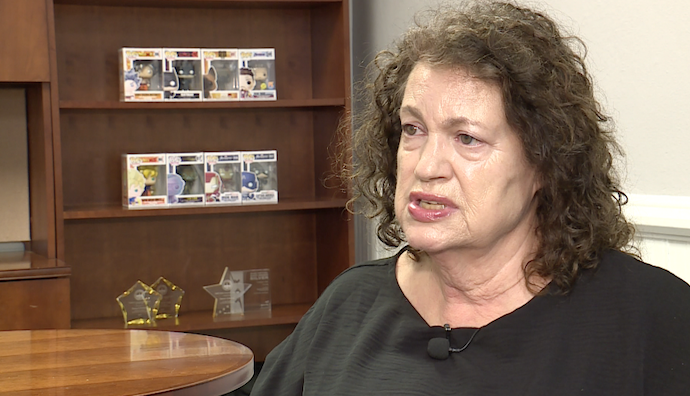
"I always thought that it was a possibility that the federal government would want to take over," Keim said.
Keim said the sale shifts the balance of power away from the city.
"When the federal government purchased the CoreCivic building, then the federal government has ultimate control over that property, and the state and city have limited recourse on what they can do," Keim said.
She said that shift could put the city's prior agreements with CoreCivic at risk.
"That could eliminate any of the provisions that they agreed to earlier," Keim said.
Keim noted that while DHS now owns the building, CoreCivic remains the contractor running the operation.
She said the city should still push for compensation.
"I would believe that it would be very frustrating for the city, having worked with CoreCivic to make agreements, to make allowances," Keim said. "Now, it's a new owner, it's the federal government, so there's a big question about whether those provisions will be honored or not.”
Property tax loss?
One of the city's biggest financial concerns is the potential loss of property tax revenue, which many supporters pointed to as the reasoning for wanting CoreCivic’s facility to reopen.
Keim explained that the federal government is not required to pay property taxes.
"They could lose property tax because the federal government doesn't pay property tax," Keim said.
Keim said the city should ask to be compensated for the cost of services it provides and pointed to a financial arrangement sometimes used in similar situations.
"They should ask for what it will cost them to provide services," Keim said. "It's not uncommon for corporations to make an agreement with a city when they're coming in. Sometimes, it's called payment in lieu of taxes. It's a PILOT. Instead of paying taxes, we'll pay you this much, and then you can use it for schools or county or city or whatever you've agreed to.”
Keim said she hopes the city and CoreCivic can find a way to work together rather than remain at odds.
"It could be a way for CoreCivic and the city of Leavenworth to figure out a way to work together because that's better, that's better than having an adversarial relationship," Keim said.
She also said the city's efforts to advocate for its residents were not wasted.
"It's absolutely worth it for any government to work for what their citizens believe in, and that's really what the city of Leavenworth was doing," Keim said.
Community member's perspective
Michael Good, a Leavenworth resident and former CoreCivic inmate, said the sale felt like a betrayal.
"I really feel like it was a bait and switch,” Good said. “I don't want to blame anybody, but I don't think that's what they imagined when they reopened it.”
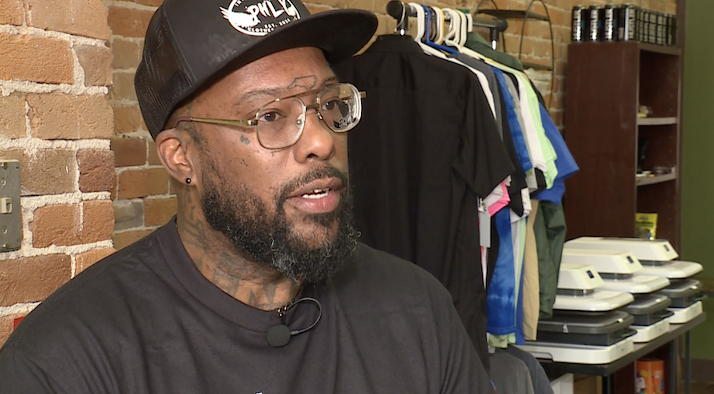
Good had opposed the facility's opening and described his time as an inmate there in stark terms.
"Being in CoreCivic, it was horrible, horrible conditions,” Good said. "Safety-wise, food-wise, we didn't get our mail on time. It was really violent. There was no respect on either end for the guards or the guards for us.”
Good says he recently served 13 of a 24-month federal sentence.
Prior to that, he says he was at CoreCivic and then spent about 17 months at the federal prison in Leavenworth during the COVID-19 pandemic, when inmates were unable to be moved.
His charge back then was possession of a firearm by a felon.
He most recently returned to prison on a probation violation.
He says his February 2025 interview with KSHB 41’s Rachel Henderson didn’t help and upset his parole officer.
“I said some disparaging things about CoreCivic and them trying to move into the ICE facility, so they were upset about it, the federal prison,” Good said.
Good was released about a month and a half ago after returning from El Reno, Oklahoma.
"Definitely worse than going to federal prison,” Good said. “That's probably the worst place I've ever been housed, CoreCivic.”
Good said he was nervous about coming back to Leavenworth after his release and worried about how the community would receive him.
"To be stopped mid-sentence like that and have to go back to prison and then nervous about coming back to Leavenworth and hoping that the community accepted me again," Good said.
He said the response from his neighbors surprised him.
"A lot of people say, ‘He's back to the same thing.' Like, ‘He hasn't changed.' So for me to be able to open up shop and show them instead of telling them feels good to me," Good said. "A lot of the community opened up their arms to me and didn't judge, so now that I'm in a position to give back, I just want to do the same for other people.”
Good opened the new Good Impressions Vinyl Studio storefront at 408 S. 5th Street in downtown Leavenworth about a month and a half ago after he was released.
The business makes custom shirts, sweatshirts, shorts, and gives away used clothing for free.
It's open from 9 a.m. to 5 p.m. for any community members.
He is also a certified notary.
His new location also houses a nonprofit called GIVS Inc., which operates a free food pantry and distributes community-donated clothing and other items.
Good said the sale of the facility has broader consequences for Leavenworth residents.
"Now that we don't have it anymore, that's less tax money we can get for schools," Good said. "I understand why they did it. I just don't agree with why they did it. So now that we don't have the facility anymore, everybody lost.”
Good said he had been a vocal opponent of the facility's reopening and did not want the outcome to feel like a victory.
"I was a big advocate for them not to open up in the first place,” Good said. “So, I don't want to have an 'I told you so moment,' but you opened up, they got control and sold it right up from underneath you.”
Good said his own experiences have shaped how he thinks about helping others.
"There were a lot of times in life where I could have helped people, and I didn’t,” Good said. “If I had known back then how good it feels to help people, I'd have done this a long time ago.”
Like the city, he’s now focused on holding onto something he doesn’t want to lose: his freedom.
"I'm never going to put myself in a position to lose it again,” Good said. “So if I can maintain a legal business, do what I'm supposed to do, take care of my family, I'm happy.”
This story was reported on-air by a journalist and has been converted to this platform with the assistance of AI. Our editorial team verifies all reporting on all platforms for fairness and accuracy.
—

![092126_KSHB_WX_480x360[61].jpg](https://ewscripps.brightspotcdn.com/dims4/default/79e7fad/2147483647/strip/true/crop/480x360+0+0/resize/960x720!/format/webp/quality/90/?url=http%3A%2F%2Fewscripps-brightspot.s3.amazonaws.com%2F6f%2F6d%2Fa3758caf4c0984b0ecf100f620d1%2F092126-kshb-wx-480x36061.jpg)