




KANSAS CITY, Kan. — KSHB 41 reporter Rachel Henderson covers neighborhoods in Wyandotte and Leavenworth counties. Share your story idea with Rachel.
—
One month after a powerful storm left thousands without power in Kansas City, Kansas, a Virginia-based nonprofit is on the ground helping residents while the city rolls out new long-term recovery resources for families still in need.
The August 18 storm was classified as a downburst — not a tornado.
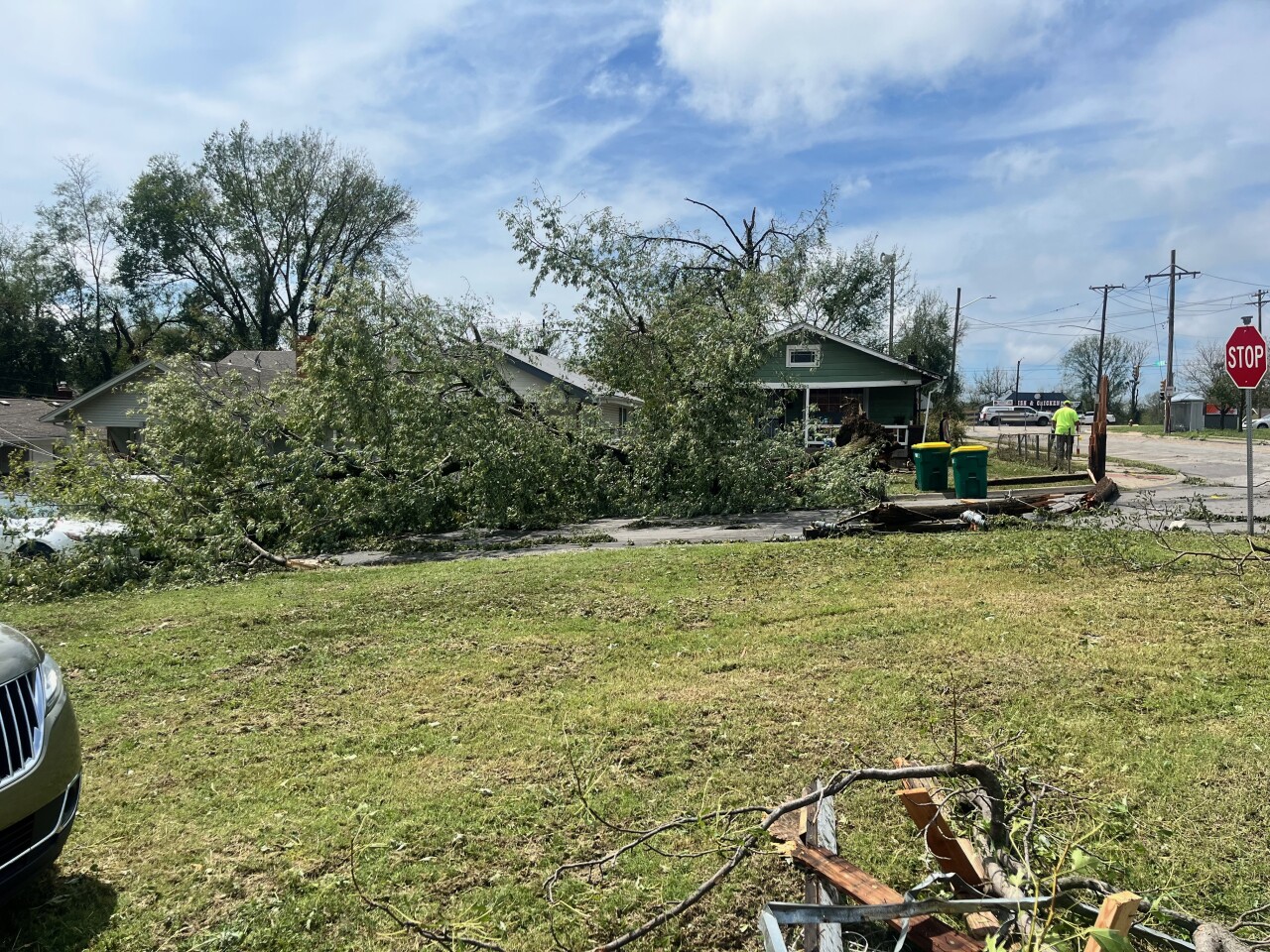
"It was a downburst, but it was very odd. So when you went out and looked at it, it was very odd, and you could tell where the highest impacted areas were," Jennifer Tarwater, director of the UG Emergency Management Department, said. "It was not a tornado, it did not meet the criteria of a tornado.”
According to the National Weather Service, downbursts are powerful winds that come from a thunderstorm and spread quickly when they hit the ground.
WATCH | Free help still arriving in KCK as city marks one month since August storm
The winds can cause similar damage to a tornado and are often misinterpreted as tornadoes.
Wyandotte County was the only county impacted by the storm.
Tarwater said the age and size of trees in the area's older, established neighborhoods contributed heavily to the damage and widespread power outages.
What the storm cost residents
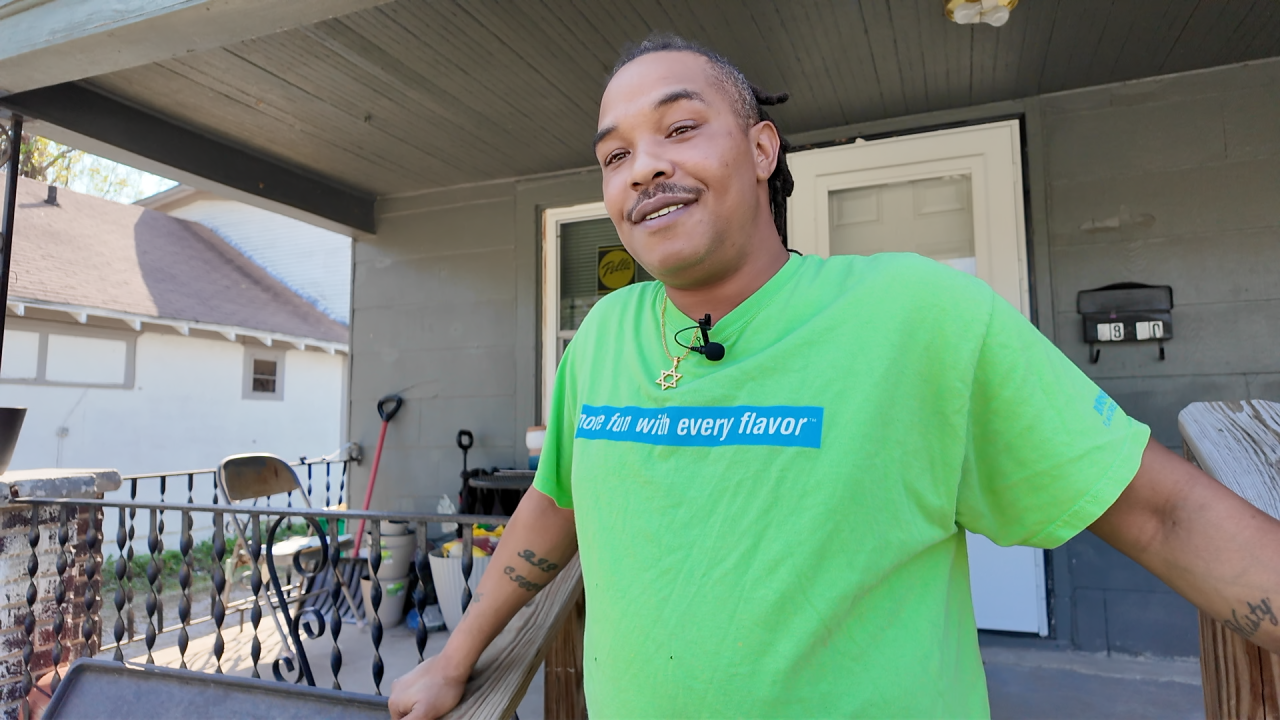
Joel Bounds, a KCK renter, was without power for four to five days.
KSHB 41 has spoken with several impacted residents, some still without power to this day.
A tree fell just inches from his back door. He said a new generator cost him around $800, and he missed two days of work.
"It was a lot of things that I couldn't get done. I didn't go to work for the first two days because I didn't know what was really going on. I had to stay home, and that was a little money out my pockets right there," Bounds said.
Bounds had no idea a crew from Christ in Action was showing up to his home Friday.
"Somebody signed me up for it I guess. Just outta nowhere," Bounds said. "I was like, aw man, that's a blessing 'cause I didn't know how that was going to work out.”
Who is Christ in Action?
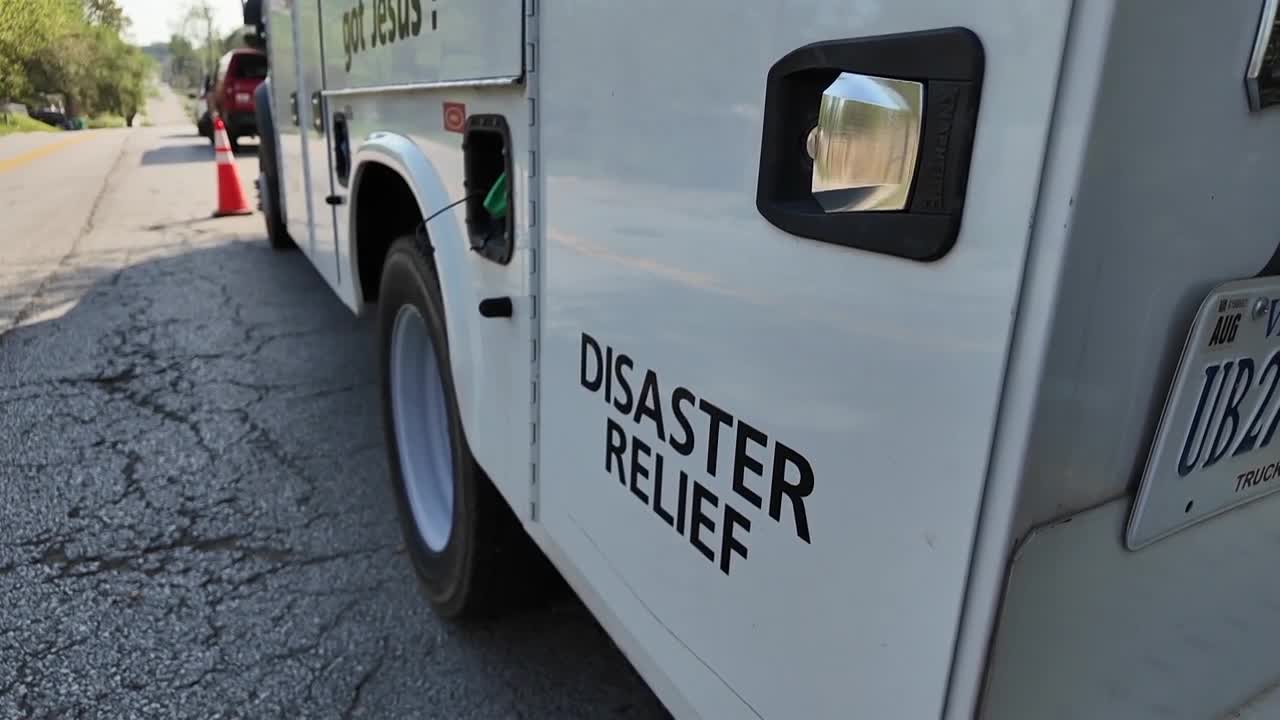
Christ in Action is a Virginia-based disaster relief nonprofit founded more than 40 years ago.
It's one of multiple out of town volunteers that's come to KCK since the storm.
The organization is entirely volunteer-run and donor-funded, and responds to disasters across the continental United States.
The group arrived in KCK this week and plans to stay about two weeks.
They're also joined by Rapid Ministries Disaster Relief, which is Kansas-based and can be found at www.rapidministries.org.
The nonprofit offers free services to homeowners, including tree removal, house gutting, and demolition. The four-person crew currently in KCK came from West Virginia and has crews in Indiana.
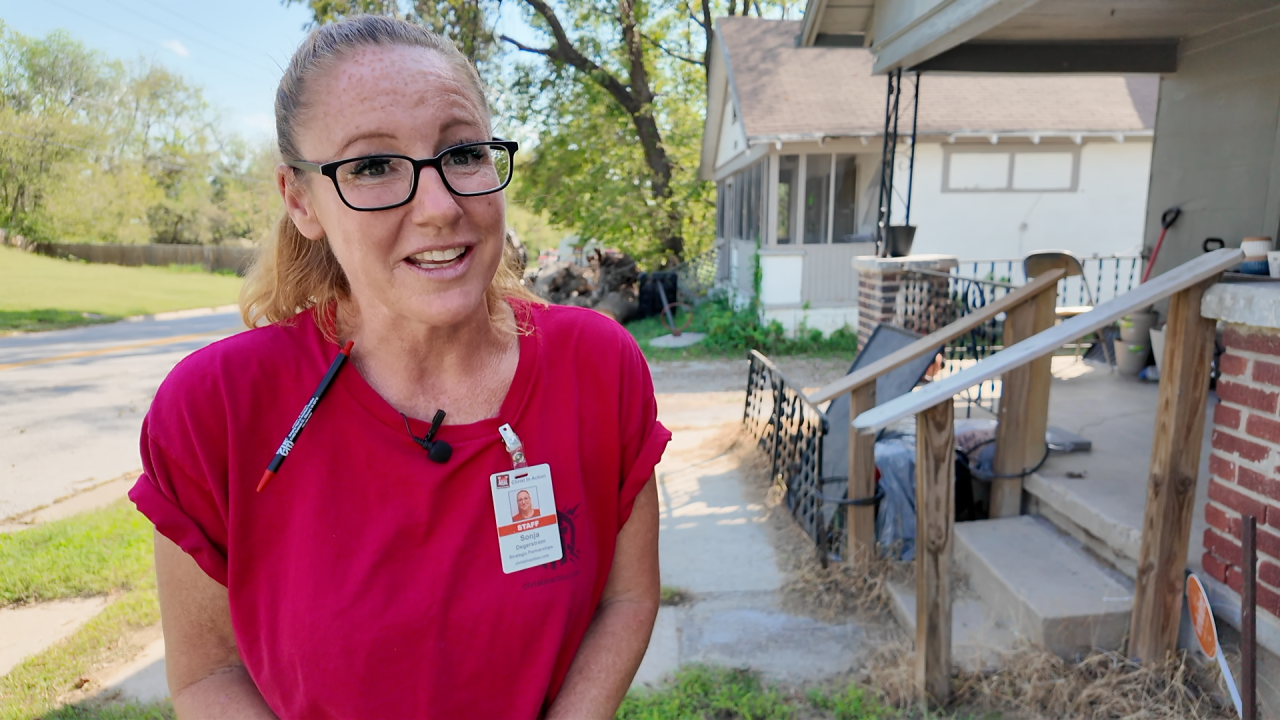
"We are helping with any trees in the backyards or front yards. Anything that is posing a hazard to being able to utilize your home," Sonja Degerstrom, who is over strategic partnerships for Christ in Action, said.
Degerstrom said the organization typically comes in when local systems are overwhelmed.
"Often times, if the local system is overwhelmed and they need extra help, emergency management will reach out to us," Degerstrom said.
That's exactly what Tarwater's team did.
"We just want to bring hope when people feel overwhelmed," Degerstrom said. "We want to come in and just take care of that for them so that they can have peace and not have that burden, and hopefully that money they would have put towards that can be put towards something else.”
Degerstrom also encouraged residents not to assume they don't qualify for help.
"Often times, people don't know that there's opportunities like this, or they think, 'Oh someone else has it worse than me.' And so we just really encourage people to reach out for those nonprofits. We want to help anyone and everyone no matter their resources or maybe income," Degerstrom said.
Residents can contact Christ in Action at 571-358-9242, by email at assistance@christinaction.com, or at christinaction.com.
What resources are available now
Tarwater said the city is now in the long-term recovery phase, and several resources are available to families with unmet needs.
Long term recovery casework: The city has launched a new casework number — 785-207-1558 — connecting residents with trauma-informed caseworkers through a program led by United Methodist of the Great Plains, the state VOAD coordinating recovery efforts.
VOAD stands for Voluntary Organizations Active in Disaster and is a coalition of independent organizations that work together before, during, and after emergencies and disasters.
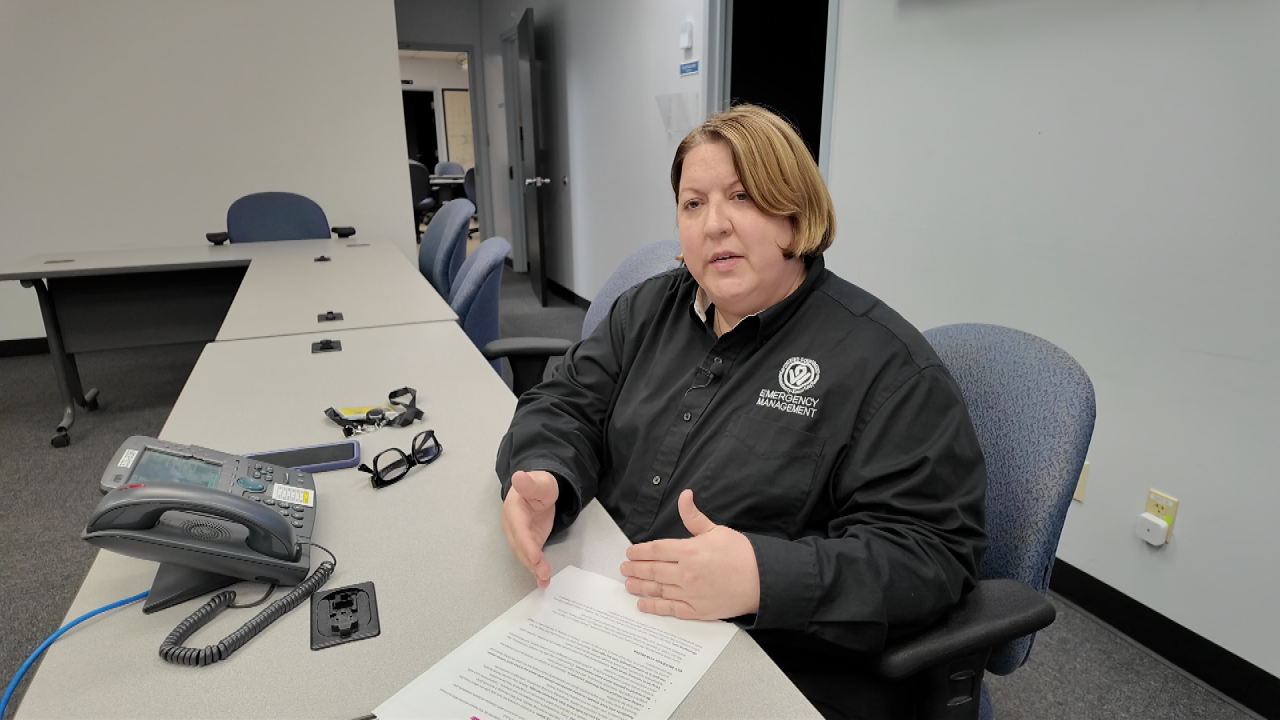
"Who we’re calling in are those that are chainsaw crews. And they have been wonderful and helped a lot of families, but they are volunteer groups, so there are a lot of limitations," Tarwater said.
Caseworkers assess each family's unmet needs and connect them with agencies that can help financially or through direct services.
"We have a method to do intensive, trauma-informed case work with families to look at on a case-by-case basis what those unmet needs are," Tarwater said. "The thing about long term recovery casework is it can take weeks, it can take months, or longer. Because it's really about what resources are available in your community.”
Tree removal: Residents can still call 3-1-1 for debris pickup and tree removal. Tarwater noted that volunteer chainsaw crews have limitations — they cannot work on trees taller than 12 feet or trees with broken limbs, as those are considered too dangerous. The city is currently working with about 60 families on tree removal.
Electrical work: Tarwater said the city is actively seeking volunteer electricians to help residents who need electrical repairs.
"We need more volunteer electricians to help with that work," Tarwater said.
SBA disaster assistance: Businesses, nonprofits, and homeowners may be eligible for Small Business Administration disaster loans to help cover repair costs.
"It's not the same as the IA, but it is something, and it is an option for families that may otherwise not be able to not make the repairs needed to their homes," Tarwater said.
Tarwater acknowledged that some residents may not qualify for SBA loans, which is part of why the long-term recovery casework program was established.
"That's one of the major indicators of why we wanted to stand that up. Because we do recognize at the end of the day, it is a loan, and so people might not meet the eligibility requirement for that and they may get denied. And we wanted to make sure we had something else lined up that can assist those families, and that's where that long-term recovery comes into play," Tarwater said.
The SBA announced Friday that they’re opening a third disaster loan outreach center on Monday, Sept. 21 at noon at the Piper Unified School District’s Gymnasium at 3130 North 122nd Street and will be open from Monday to Friday from 9 a.m. to 5 p.m.
It closes Friday, Oct. 2 at 5 p.m.
You can find more information about the other two locations' hours at the bottom of our article here.
Why FEMA individual assistance isn't available
Tarwater said the storm did not meet the criteria for FEMA individual assistance, which is reserved for catastrophic, community-wide disasters.
"It's tough to hear that because some people may think that it's minimizing their experience or the financial hardships. So there are very much financial hardships to folks that were impacted here," Tarwater said. "That was very impactful to the families, but when you look at the criteria, it just doesn't meet the criteria for FEMA's IA. It just didn’t.”
She says he last time the state of Kansas received FEMA individual assistance was during southeast Kansas floods in 2007.
The last time Wyandotte County received it was after a 2003 tornado.
The state of Kansas is pursuing FEMA public assistance on Wyandotte County's behalf, which would help reimburse expenses like equipment rentals, staff overtime, fire station damage, and debris removal.
Tarwater said it can take several months to find out whether that funding is approved.
Tarwater urged residents to be patient as the process continues.
"Just kind of be patient because this is a long process. This is a long-term recovery process, so case work can take a while, debris removal can take a while," Tarwater said.
The quickest part of this process — planting a seed.
The Christ in Action team prayed over Bounds' home after they finished their work.
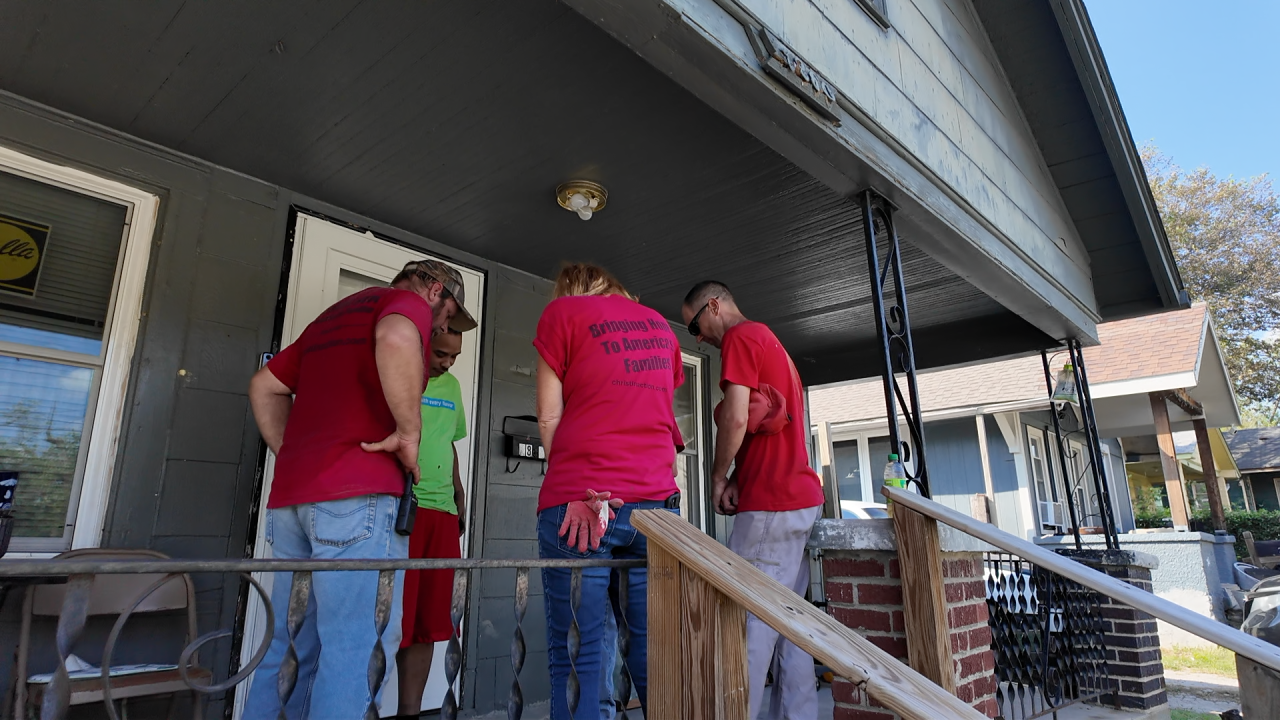
"That means a lot," Bounds said.
This story was reported on-air by a journalist and has been converted to this platform with the assistance of AI. Our editorial team verifies all reporting on all platforms for fairness and accuracy.
—

![020626_KSHB_Image_NXA_Web_Standard Cube[88].jpg](https://ewscripps.brightspotcdn.com/dims4/default/0ead409/2147483647/strip/true/crop/300x225+0+13/resize/960x720!/format/webp/quality/90/?url=http%3A%2F%2Fewscripps-brightspot.s3.amazonaws.com%2F8f%2F6c%2Ffad8bd2346c5a4d4ead793017d4a%2F020626-kshb-image-nxa-web-standard-cube88.jpg)